
Patio Installation Near Me: A Practical Guide to Building Your Perfect Outdoor Space
Patio Installation Near Me: Start Here
Looking for patio installation near me? A new patio can transform your backyard into a functional, cozy extension of your home. This guide walks you through why a patio is a smart investment, how to find local installers, what materials to consider, expected costs, permitting, and maintenance so you can make confident decisions.
Why Install a Patio?
Patios increase usable living space, improve curb appeal, and can add resale value. Whether you want a quiet place for morning coffee, a dining area for family dinners, or a durable space for entertaining, a well-designed patio delivers both beauty and function.
Finding ‘Patio Installation Near Me’
Local Search Tips
Start with a simple search for ‘patio installation near me’ and review local listings, Google Business profiles, and maps. Pay attention to photos of completed projects, the range of services offered, and whether the installer specializes in the material you prefer (pavers, concrete, natural stone, etc.).
Check Reviews and Portfolio
Online reviews are useful, but look for detailed feedback and recent photos. A reliable contractor will have before-and-after photos and references you can contact. If possible, visit a nearby completed project to see workmanship up close.
Questions to Ask Potential Installers
- Are you licensed and insured in my area?
- Can you provide references and a portfolio of recent work?
- What is the projected timeline and payment schedule?
- Do you handle permits and inspections?
- What warranty do you offer on labor and materials?
Popular Patio Materials
Pavers
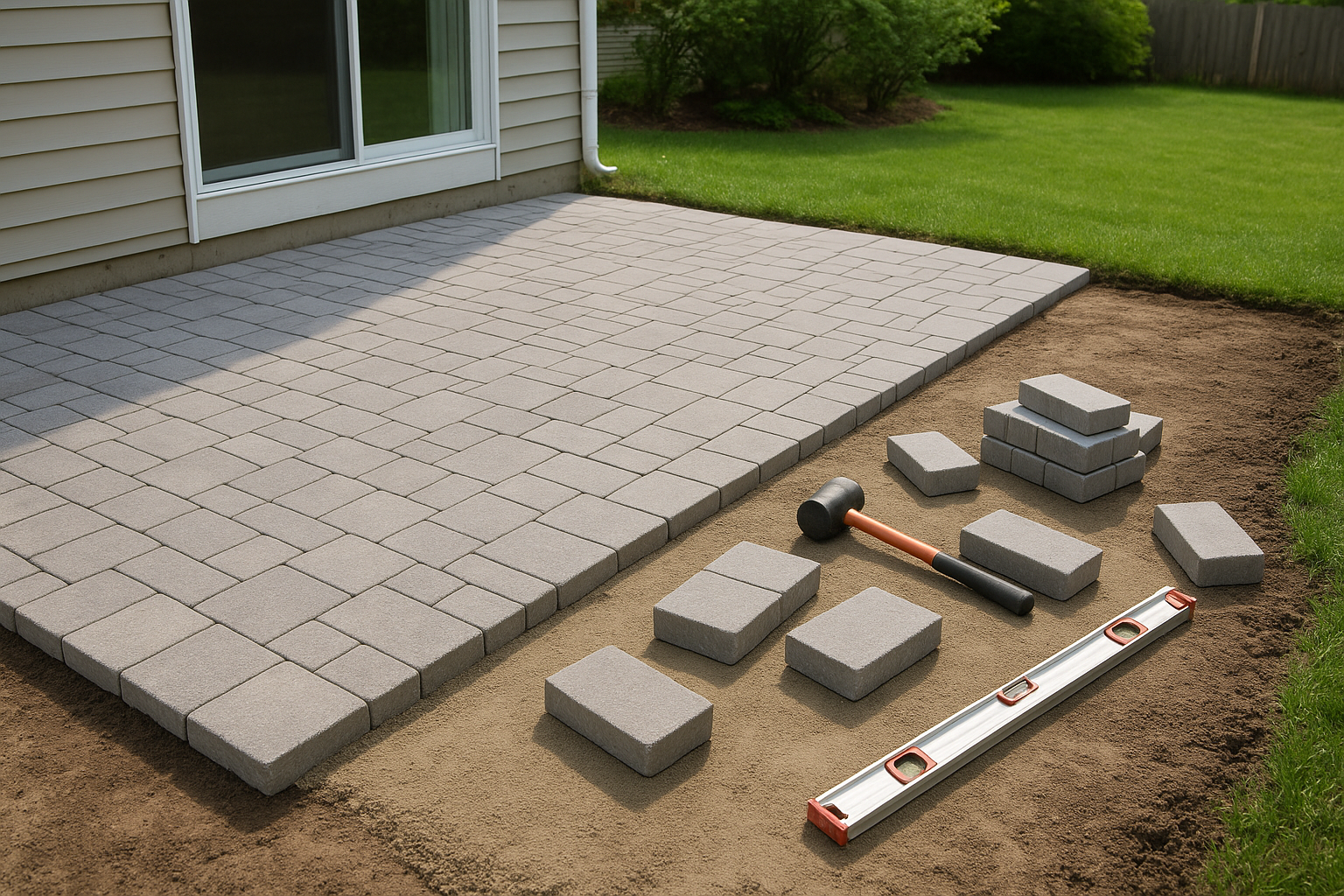
Pavers are versatile and come in many colors and patterns. They resist cracking and are relatively easy to replace if damaged. Paver patios are great for design flexibility.
Concrete
Concrete is affordable and durable. Options include stamped or stained concrete for a more decorative finish. Proper installation and control joints help prevent cracking.
Natural Stone
Natural stone like bluestone, flagstone, or slate creates an upscale, organic look. It tends to be pricier but offers longevity and unique character.
Other Options
Brick, gravel, and composite tiles can also work depending on your style and budget. Each material carries different maintenance and drainage considerations.
Cost & Budgeting
Cost varies by material, size, site complexity, and labor rates in your area. Ballpark ranges:
- Basic concrete: low to mid-range
- Pavers: mid-range to high depending on style
- Natural stone: typically high-end
Get at least three detailed quotes that break down materials, excavation, base materials, drainage solutions, and any additional work like steps or retaining walls. Factor in a 10-20% contingency for unexpected site conditions.
The Patio Installation Process
A solid installation follows consistent steps for longevity and performance:
- Site preparation and grading to ensure proper drainage
- Excavation to the required depth
- Installation of compacted base material (crushed stone, gravel)
- Edge restraints to prevent shifting
- Laying material (concrete pour, paver placement, stone setting)
- Compaction, jointing sand or mortar, and sealing if needed
- Final cleanup and inspection
Choosing the Right Contractor
Look for contractors who communicate clearly, provide written contracts, and include timelines and warranties. Avoid low bids that look too good to be true — they often cut corners or add unexpected charges later. A trustworthy contractor will offer an itemized quote and explain why certain steps (like a thick compacted base) are essential.
Permits, Codes & Site Prep
Check local building codes and whether your project requires a permit. Permits protect you and ensure the work follows local safety and drainage rules. Also consider utility lines, HOA rules, and how the new patio will integrate with existing landscaping.
Maintenance Tips to Keep Your Patio Great
- Clean regularly: sweep debris and power-wash annually if appropriate.
- Seal surfaces: sealing concrete and pavers can protect against stains and fading.
- Address weeds: use polymeric sand between pavers or appropriate jointing material.
- Repair promptly: replace cracked pavers or re-level settled areas to prevent bigger problems.
Conclusion
Searching for ‘patio installation near me’ is the first step toward a beautiful, functional outdoor living area. By researching materials, getting multiple quotes, checking reviews, and confirming permits, you can confidently move forward with a project that fits your budget and lifestyle. Ready to start? Reach out to a few local pros, compare quotes, and schedule a site visit to get your patio plans underway.