
Landscape Drainage Pipes: Choosing, Installing, and Maintaining Effective Solutions
Why Landscape Drainage Matters
Poor drainage can turn a beautiful yard into a muddy mess, damage foundations, and harm plantings. Landscape drainage pipes are a practical, long-term solution for controlling water flow, protecting structures, and keeping soil healthy. This guide walks you through the types of pipes available, how to choose the right one for your situation, step-by-step installation basics, and routine maintenance tips to keep your system working year after year.
Types of Landscape Drainage Pipes
Understanding the most common pipe types helps you match the pipe to the job. Each has advantages depending on soil, water volume, and how the pipe will be covered or used.
Perforated PVC
Perforated PVC is rigid, durable, and often used in French drains. The perforations allow groundwater to enter the pipe while the surrounding gravel filters out large particles. It’s great for yard drainage where the pipe needs to hold its shape under load.
Corrugated HDPE (Flexible Drainage Pipe)
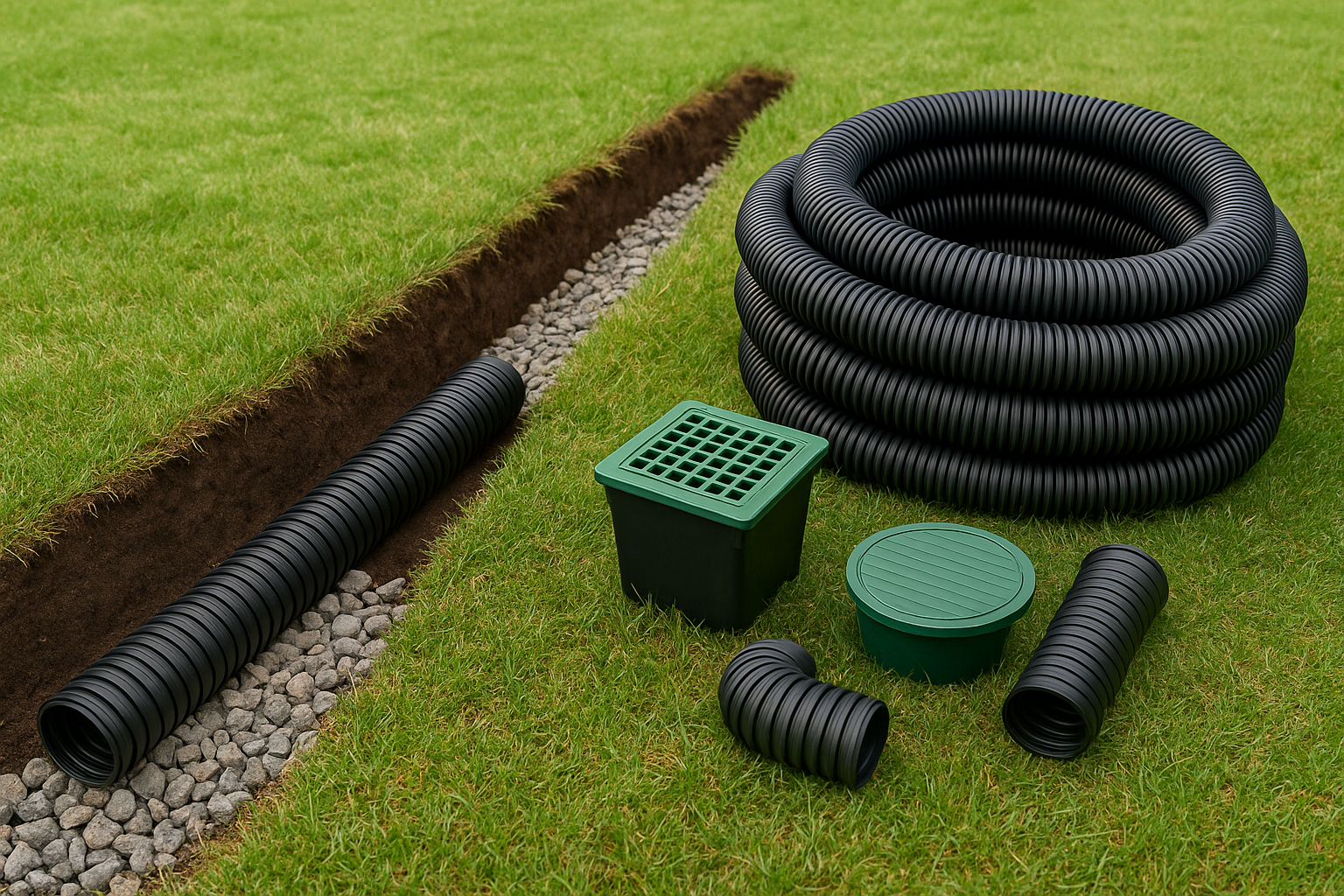
Corrugated high-density polyethylene pipe is flexible and easy to work with—ideal for winding runs and retrofit projects. Many corrugated pipes are available perforated or solid. They’re lightweight and resistant to root intrusion, but may be less durable under heavy loads without proper bedding.
Solid PVC or HDPE
Solid pipes are used to move water long distances without letting it dissipate along the route. Use solid pipe from the end of a perforated system to a safe discharge point like a storm sewer, dry well, or daylighted outlet.
Choosing the Right Pipe for Your Yard
Selecting the correct pipe depends on a few site-specific factors. Answer these questions before you buy materials.
Soil Type and Permeability
Sandy soils drain quickly and might need less perforation area than clay soils, which hold water and may require more extensive drainage solutions. If your yard has heavy clay, consider a more robust gravel-filled French drain and larger diameter pipe.
Slope and Flow
A steady slope helps gravity move water through the pipe. For low-slope areas, you may need larger pipes or a pumped solution. Measure fall over the run to ensure adequate flow—typically 1% grade (1 foot drop per 100 feet) is a good minimum for gravity systems.
Load and Coverage
If the pipe will be under driveways, patios, or heavy equipment, choose rigid pipe with proper bedding and cover. For lawn-only installations, flexible corrugated pipe is often sufficient when properly installed with gravel.
How to Install Landscape Drainage Pipes
Tools and Materials
- Perforated or solid drainage pipe (appropriate diameter)
- Gravel or aggregate for bedding and backfill
- Landscape fabric to prevent clogging
- Shovel, trenching tool, or small excavator
- Level, string line, and stakes to measure slope
Step-by-Step Installation
- Plan the route: mark the trench line from the wet area to a legal discharge point (street inlet, storm drain, daylight).
- Dig the trench: depth depends on frost line and pipe size—typically 12–18 inches for yard drains; deeper near foundations as needed. Keep a consistent slope.
- Lay a gravel base: 2–3 inches of coarse gravel provides bedding and improves filtration.
- Line with landscape fabric: this prevents sediment from entering the gravel while allowing water through.
- Place the pipe: lay perforated pipe with holes facing down if directed, then cover with more gravel until the pipe is fully surrounded.
- Wrap and backfill: fold the fabric over the gravel, then backfill with soil and restore the surface.
Common Mistakes to Avoid
- Insufficient slope—causes standing water and clogging.
- Skipping landscape fabric—leads to sediment clogging the gravel and pipe.
- Routing water to an inappropriate discharge point—always check local codes.
Maintenance and Troubleshooting
Routine Maintenance
Inspect visible outlets and catch basins annually and after major storms. Remove debris from outlet points and ensure the discharge area remains clear. For systems with cleanouts, open them periodically to flush out silt. If you use a lawn mower around the trench line, avoid vigorous compaction over the pipe.
Signs of Problems and Fixes
- Slow draining: check for silt buildup in gravel or perforations—consider flushing from a cleanout or replacing the gravel zone.
- Wet spots return after rain: the pipe may be crushed or roots intruded—excavate the affected area and repair or replace the pipe.
- Pooling at the outlet: ensure the discharge point is unobstructed and not re-saturating the yard; extend the outlet or add a dry well if needed.
Conclusion
Landscape drainage pipes are an effective way to protect your yard and home from water damage when you pick the right type, install with attention to slope and filtration, and maintain the system regularly. With thoughtful planning and simple upkeep, a properly installed drainage system can keep your landscape healthy and functional for years.