
Garden Lighting Tips: Illuminate Your Outdoor Space with Style and Purpose
Introduction
Good garden lighting does more than make paths visible at night — it creates atmosphere, highlights favorite plants, improves safety, and extends the hours you can enjoy your outdoor space. With a little planning and the right fixtures, you can transform a dark yard into a welcoming, functional landscape. These garden lighting tips will help you light smarter, save energy, and get the look you want.
Why Garden Lighting Matters
Beyond aesthetics, garden lighting serves practical needs. Proper illumination improves safety on steps and walkways, deters intruders, and protects features from accidental damage. Thoughtful lighting also draws attention to textures, color, and garden architecture, giving your landscape depth and dimension after the sun goes down.
Plan Before You Install
Define purpose
Start by listing what you want from your lighting: safety, ambiance for evening entertaining, highlighting a specimen tree, or lighting a vegetable patch. Prioritizing purpose helps determine the types of fixtures and brightness you’ll need.
Map your space
Walk the garden at night with a flashlight or use photos taken after dark. Sketch a simple plan showing paths, steps, seating areas, water features, and focal points. Mark where low light might cause hazards and where you want to draw attention.
Budget and power sources
Decide how much you want to spend and whether you’ll use mains power, low-voltage systems, or solar fixtures. Low-voltage wired systems are reliable and flexible; solar lights are easier to install and good for smaller or remote areas. Factor in installation, bulbs, transformers, and smart controls when budgeting.
Choose the Right Fixtures
Path lights
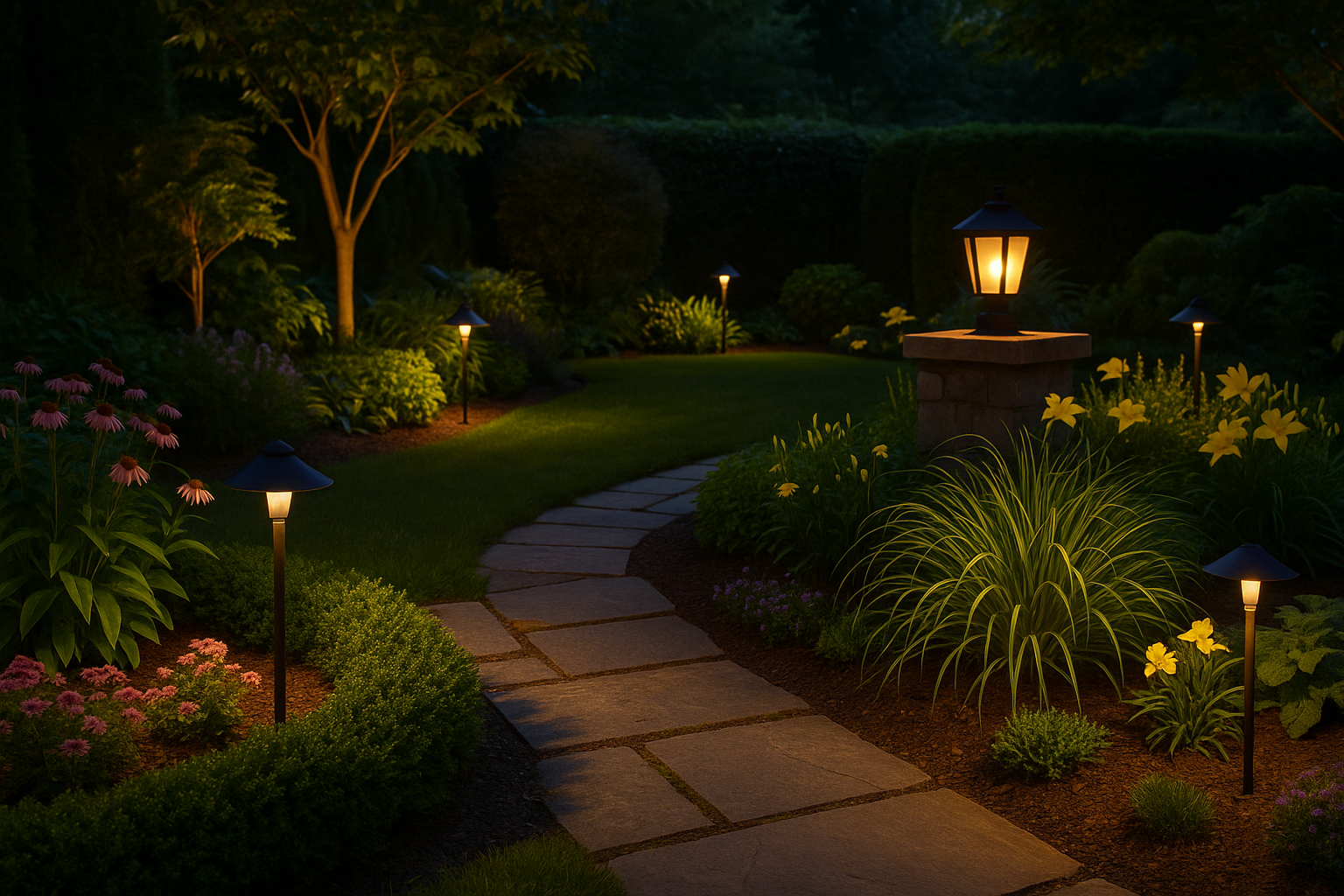
Path lights create safe, inviting walkways. Opt for low, well-shielded fixtures that cast downward light to avoid glare. Space them to create an even pool of light rather than bright spots followed by dark gaps.
Spotlights and uplights
Use spotlights to highlight trees, sculptures, or architectural details. Uplighting a canopy or a textured wall adds drama. Be mindful of beam angle and distance to avoid harsh shadows or over-lighting.
String lights and lanterns
String lights are perfect for patios and pergolas, adding warm ambiance. Lanterns and bollard lights work well for casual seating areas. Choose appropriate outdoor-rated fixtures and bulbs for damp conditions.
Step and deck lights
Recessed step lights or small deck-mounted fixtures increase safety by illuminating changes in height. These should be positioned to avoid shining into eyes while clearly lighting the tread.
Solar vs wired
Solar lights have come a long way and are ideal for low-traffic areas or decorative accents. For consistent brightness and broader coverage, wired low-voltage or mains options are best. Consider a hybrid approach: wired for main areas and solar for accents.
Placement and Layering
Layering: ambient, task, accent
Think in layers: ambient lighting sets the overall mood, task lighting helps you cook, read, or walk safely, and accent lighting highlights features. Combining layers gives depth and flexibility.
Avoid glare and light trespass
Angle fixtures downward and use shields to reduce glare. Position lights so they do not shine directly into neighbors’ windows. Soft, warm-color temperatures (2700K–3000K) feel more natural and less intrusive.
Lighting focal points
Choose one or two focal points — a specimen tree, water feature, or sculpture — and light them prominently. Avoid trying to light every plant; selective highlighting creates interest without clutter.
Energy Efficiency & Maintenance
LEDs and energy savings
LED bulbs use far less energy, last longer, and produce less heat than incandescent bulbs. They’re available in a range of color temperatures and beam angles, making them versatile for most garden applications.
Timers, sensors, and smart controls
Use timers, dusk-to-dawn sensors, or smart home integrations to ensure lights are on only when needed. Motion sensors are excellent for security and can dramatically reduce run time for certain fixtures.
Maintenance tips
Keep lenses and fixtures clean to maintain light output. Replace bulbs promptly, check connections for corrosion, and trim foliage that might block light. For wired systems, inspect transformers and seals yearly.
Safety and Local Regulations
Check local codes and homeowners’ association rules for restrictions on brightness, fixture types, or hours of operation. For electrical installations, especially mains power, hire a qualified electrician to ensure safe and code-compliant work.
Conclusion
Great garden lighting balances form and function: it enhances safety, showcases your landscape, and creates inviting outdoor living spaces. Start with a clear plan, choose the right fixtures, layer your lighting, and focus on energy-efficient solutions. A thoughtful approach will reward you with a garden that looks as good at night as it does by day.