
Arbors and Trellises: Transform Your Garden with Vertical Charm
Introduction
Arbors and trellises are elegant, practical additions to any garden—offering structure, height, and a place for climbing plants to thrive. Whether you’re looking to create a romantic entryway, define a pathway, or add vertical interest to a small yard, these structures unlock creative possibilities without overwhelming the space.
What Are Arbors and Trellises?
Definitions
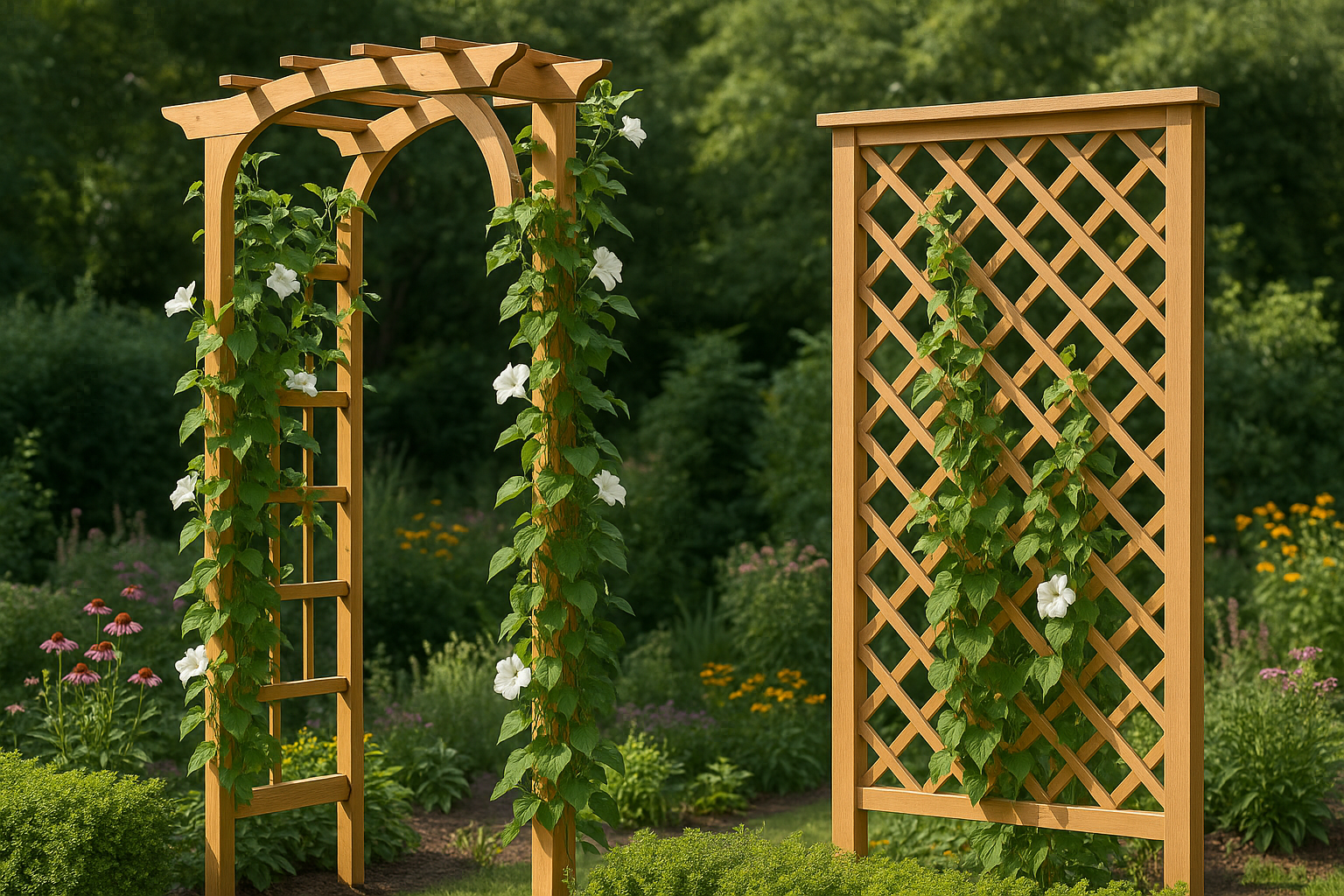
An arbor is typically a freestanding structure that forms an arched gateway or a small shaded area. Arbors can be simple or elaborate and often become focal points in the landscape. A trellis is usually a flat or slightly curved panel of latticework used to support climbing plants against walls, fences, or as standalone screens.
Key Differences
- Shape: Arbors are often arch-like and three-dimensional; trellises are usually flat or panel-like.
- Function: Arbors define entrances or create shaded seating; trellises primarily support vertical growth.
- Placement: Arbors are freestanding, while trellises can be mounted or free-standing.
Benefits of Adding Arbors and Trellises
For Plants
Vertical support helps climbing plants get better air circulation and sun exposure, reducing disease and encouraging more blooms or fruit. Vines such as clematis, climbing roses, jasmine, and even certain vegetables like peas and cucumbers perform wonderfully on trellises and arbors.
For Garden Design
Architectural elements add depth and layers to a landscape. Arbors and trellises guide movement, frame views, and can create privacy screens without building solid fences. They also allow gardeners to grow upwards when horizontal space is limited, making the garden feel larger and more dynamic.
Materials and Styles
Common Materials
- Wood: Traditional, warm, and easy to customize. Cedar and redwood resist rot naturally but still require maintenance.
- Metal: Durable and perfect for ornate designs. Powder-coated steel or wrought iron can last decades with minimal upkeep.
- Vinyl/Composite: Low-maintenance and weather resistant. Vinyl can look modern but might lack the natural feel some gardeners prefer.
Design Styles
From rustic and cottage-style lattices to sleek modern panels or vintage-inspired wrought iron arbors, choose a style that complements your home and garden. Consider size and scale: a large formal arbor suits grand entrances, while a small trellis is ideal for cottage borders or patio containers.
How to Choose the Right Arbor or Trellis
Site Selection
Start by observing sunlight, wind patterns, and the visual lines of your garden. Place structures where they will receive the appropriate light for chosen plants and where they will enhance movement—at a path junction, entrance, or to break up a long fence line.
Plant Pairing
Match plant vigor to structure strength. Heavy climbers like wisteria need strong, well-anchored arbors, while light vines like clematis or morning glory work well on delicate trellises. Think about bloom time and color to create seasonal interest—mix early-blooming vines with later-flowering species for continuous display.
Installation and Maintenance
Basic Installation Steps
- Plan: Measure area and mark placement. Consider access for planting and maintenance.
- Foundation: For arbors, set posts in concrete footings to prevent leaning. Trellises can be anchored to walls or embedded in the ground with treated posts.
- Assembly: Follow manufacturer instructions or build using quality fasteners and weather-resistant materials.
Seasonal Care
Prune vines regularly to maintain shape and airflow. Inspect hardware and joints annually for rust or loosening, repaint or seal wood every few years, and remove heavy snow loads promptly to avoid structural damage. Routine attention extends life and keeps plants healthy.
DIY vs. Professional Installation
When to DIY
If you have basic carpentry skills and are installing a small trellis or modest arbor, a DIY project can be rewarding and cost-effective. Prefab kits simplify the process and are available for many garden styles.
When to Hire a Pro
Call a professional for large arbors, complex foundations, or if you want integrated lighting, irrigation, or masonry work. Pros ensure proper anchoring, especially in windy or uneven sites, and can help with design coordination.
Conclusion
Arbors and trellises are more than decorative accents; they shape the garden and support life—both plant and human. With thoughtful planning, the right materials, and regular care, these structures will bring height, texture, and seasonal interest to your outdoor space for years to come.