
Permeable Paving Solutions: Sustainable, Practical Options for Every Project
What is Permeable Paving?
Permeable paving refers to paving materials and systems designed to allow stormwater to infiltrate through the surface and into the ground rather than run off into drains. This approach reduces surface flooding, replenishes groundwater, and filters pollutants. Permeable paving is becoming a go-to choice for sustainable landscaping, urban design, and residential driveways.
Key Benefits of Permeable Paving
- Stormwater management: Reduces runoff volume and peak flows, lowering the strain on municipal storm systems.
- Improved water quality: Filters sediments and some pollutants as water passes through layers of material and soil.
- Reduced heat island effect: Some permeable materials retain less heat than traditional asphalt or concrete.
- Groundwater recharge: Supports natural hydrology by allowing water to percolate back into aquifers.
- Design flexibility: Available in a variety of textures and colors to match aesthetic goals.
Types of Permeable Paving Solutions
Choosing the right permeable paving system depends on site conditions, load requirements, budget, and maintenance capacity. Below are common options with their strengths and typical uses.
Porous Asphalt
Porous asphalt is similar to conventional asphalt but formulated without fines so it has interconnected voids for water to pass through. It performs well for parking lots and low- to moderate-traffic roads. Benefits include good structural strength and ease of repair; drawbacks include potential clogging if not maintained.
Permeable Interlocking Concrete Pavers (PICP)
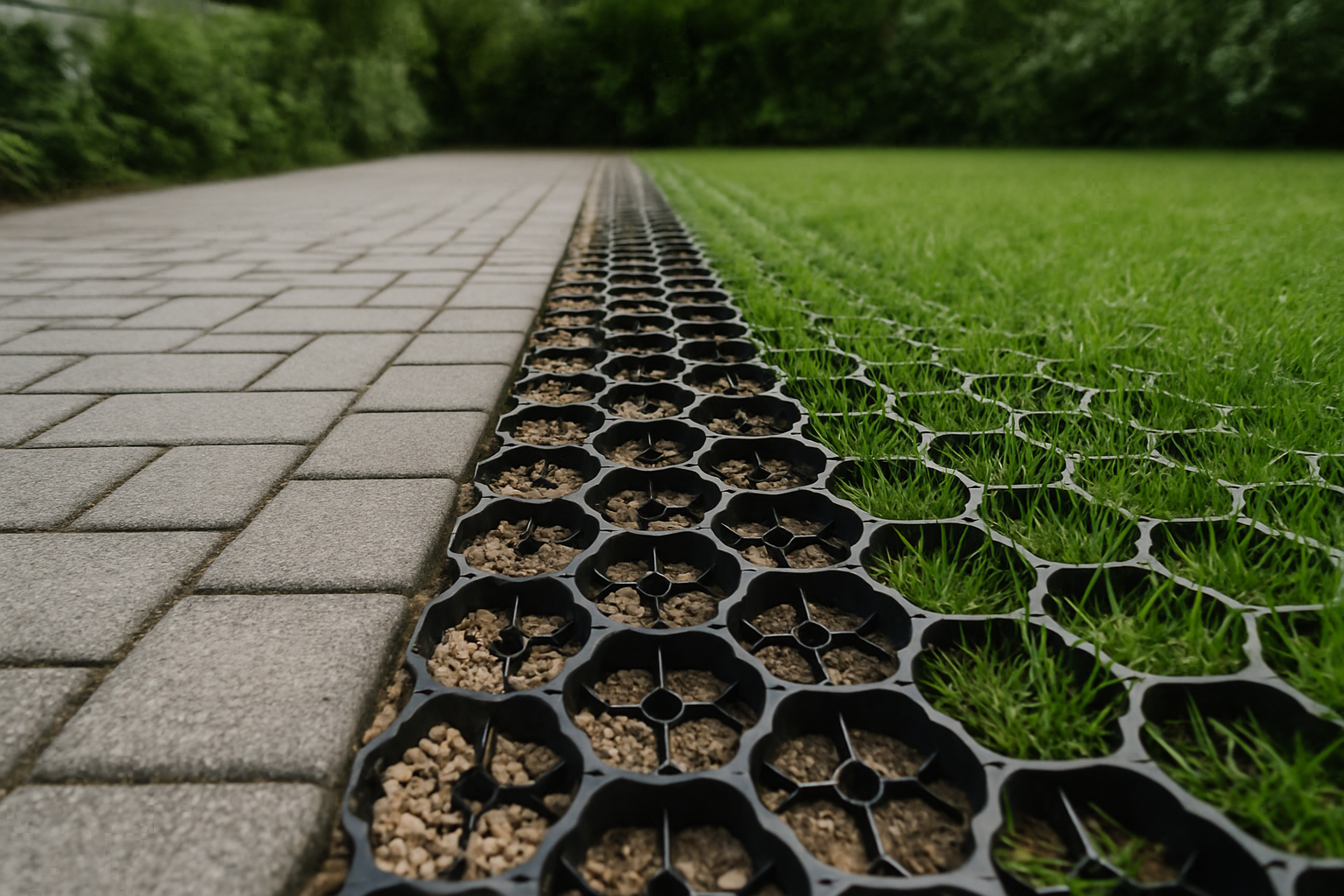
Pavers are set on a bed of clean stone to create voids that allow water infiltration. Joints are filled with permeable aggregates. PICP is durable, visually appealing, and suitable for driveways, patios, and pathways. It can handle heavier vehicle loads when designed with a robust base.
Resin-Bound and Resin-Bonded Surfaces
Resin-bound systems mix aggregate with a clear resin and lay it as a seamless surface. Resin-bonded uses a thin layer where loose aggregate is applied to a resin layer. These systems are smooth, decorative, and ADA-friendly, making them ideal for walkways, cycle paths, and small parking bays.
Gravel or Aggregate Pavements
Loose gravel on a compacted subbase is one of the simplest permeable solutions. It’s inexpensive and easy to install, but it can migrate and requires edging and occasional raking. Suitable for rural driveways and low-traffic areas.
Grass Pavers / Reinforced Turf
Grass pavers are plastic or concrete grid systems filled with soil and grass. They provide a green aesthetic while supporting light vehicular loads. They’re ideal for overflow parking, emergency access lanes, and fire roads in environmentally sensitive areas.
Design and Installation Considerations
Permeable paving is not one-size-fits-all. Design should account for:
- Soil permeability: Conduct an infiltration test to determine how quickly water will soak into native soils. Low-permeability soils may require underdrains or amended subbases.
- Load requirements: Driveways and commercial areas need stronger base layers to distribute loads and prevent rutting.
- Slope and drainage: Gentle slopes are acceptable, but steep grades may cause erosion or reduced infiltration. Consider tiered installations on slopes.
- Local regulations: Many jurisdictions have stormwater ordinances and incentives for permeable installations—check permit requirements.
Maintenance Tips
Permeable pavements are low-maintenance but not maintenance-free. Regular care will keep them functioning:
- Vacuum sweep or use a regenerative air sweeper once or twice a year to remove sediment from surface voids.
- Remove oil and heavy debris promptly. Some stains can be cleaned with biodegradable degreasers.
- Replenish joint aggregates in paver systems when needed.
- Avoid using fine materials (like sand) on permeable surfaces that can clog pores.
- Inspect after heavy storms for signs of ponding or erosion and repair settling areas.
Common Applications and Real-World Examples
Permeable paving is used in many settings:
- Residential driveways and patios to reduce runoff and improve aesthetics.
- Commercial parking lots that need to meet stormwater regulations.
- Pedestrian plazas and bike lanes where pedestrian comfort and drainage matter.
- Roadside swales and emergency access lanes with reinforced grass pavers.
Municipal projects often pair permeable pavements with bioswales, rain gardens, and detention basins to create holistic green infrastructure.
Costs and Return on Investment
Upfront costs for permeable paving can be higher than conventional materials, depending on the system and subbase requirements. However, long-term savings include reduced stormwater fees, lower need for stormwater infrastructure, and potential incentives or credits from local governments. When you factor in environmental benefits and improved resilience to flooding, many homeowners and municipalities find the investment worthwhile.
Conclusion
Permeable paving offers a practical, attractive way to manage stormwater while supporting sustainable landscapes. With multiple material options and design approaches, there’s a permeable solution suitable for nearly every project—from small residential patios to large commercial parking areas. Consider soil conditions, load needs, and maintenance capacity when choosing a system, and you’ll get reliable performance plus environmental benefits for years to come.