
Retaining Wall Ideas: 12 Stylish, Practical Options for Any Yard
Why Retaining Walls Matter (and What They Can Do for Your Yard)
A retaining wall is one of those landscaping upgrades that looks great and works even harder behind the scenes. It holds back soil on sloped properties, helps prevent erosion, manages runoff, and can turn an awkward incline into usable outdoor space. With the right design, a retaining wall can also become a major style feature—framing gardens, defining patios, or creating tiered planting beds that make your yard feel intentionally designed.
Below are retaining wall ideas that balance function and curb appeal, along with tips on choosing the right approach for your space.
Retaining Wall Ideas by Material
1) Concrete Block (Segmental Retaining Wall Blocks)
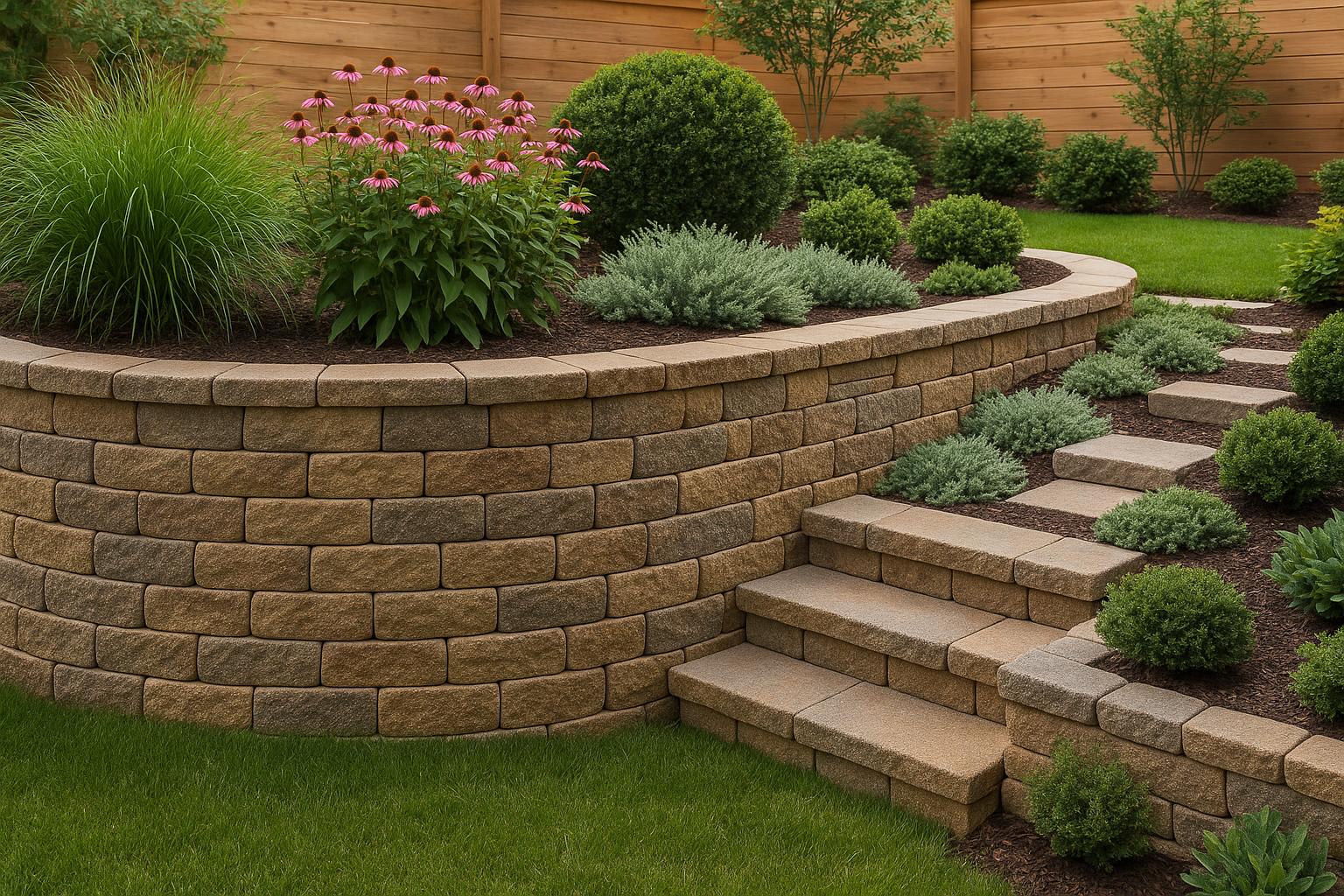
Segmental retaining wall blocks are a popular choice because they’re durable, widely available, and relatively straightforward to install. Many systems are designed to interlock and can be built as straight runs or gentle curves. They come in a range of colors and textures—some even mimic natural stone.
- Best for: Medium to large walls, clean modern lines, DIY-friendly projects
- Style tip: Choose a block with a lightly textured face for a more natural look
2) Natural Stone for a Timeless Look
Natural stone retaining walls have a classic, high-end feel and blend beautifully into garden landscapes. You can opt for stacked stone (dry stack) or mortared stone depending on the look and structural needs. Stone works especially well in cottage gardens, woodland landscapes, and homes with stone accents.
- Best for: Organic landscaping, premium curb appeal
- Style tip: Repeat the stone elsewhere—like a stepping path or garden edging—for a cohesive design
3) Poured Concrete for Sleek, Modern Design
If you’re aiming for crisp lines and a contemporary vibe, poured concrete is a strong contender. It’s long-lasting, can handle taller walls, and offers a smooth (or board-formed) finish that pairs well with modern architecture. You can also stain or tint concrete for added warmth.
- Best for: Modern homes, tall or load-bearing walls
- Style tip: Add subtle landscape lighting to wash the surface at night
4) Timber Sleeper Walls for Warmth on a Budget
Wood retaining walls—often built with landscape timbers or sleepers—bring a warm, rustic feel and can be cost-effective for small to medium projects. The key is using pressure-treated or rot-resistant lumber and building with proper drainage to extend its lifespan.
- Best for: Smaller walls, casual backyards, quick transformations
- Style tip: Combine wood with gravel paths and drought-tolerant plants for an easy-care landscape
5) Gabion Walls for Texture and Drainage
Gabion retaining walls are wire cages filled with stone. They have a bold, architectural look and naturally allow water to drain through, which can be helpful in wet areas. The “industrial-meets-natural” vibe works well in modern, coastal, or hillside settings.
- Best for: Erosion-prone areas, modern design, excellent drainage needs
- Style tip: Use a consistent rock size and color for a cleaner, more intentional look
6) Brick Retaining Walls for Traditional Charm
Brick is a great choice when you want a polished, classic look that complements traditional homes. Brick retaining walls can be straight and formal or gently curved to soften a garden edge. Keep in mind that brick typically needs a solid foundation and careful detailing to resist movement.
- Best for: Front-yard landscaping, formal gardens, matching existing brickwork
- Style tip: Cap the wall with stone or concrete coping for a finished edge
Retaining Wall Ideas by Function and Layout
7) Tiered Retaining Walls to Tame a Steep Slope
If your yard has a steep grade, tiered retaining walls can break the slope into manageable levels. This approach reduces pressure on any single wall and creates natural planting zones—perfect for shrubs, perennials, or even a vegetable garden.
- Best for: Steep backyards, hillside homes, larger landscapes
- Design tip: Leave enough flat space between tiers for comfortable planting and maintenance
8) Low Garden Border Walls for Subtle Structure
Not every retaining wall needs to be tall. A low wall (often 6–18 inches) can define garden beds, keep mulch tidy, and create a clean edge along a lawn or walkway. These smaller walls are also a nice way to test a new style without a major build.
- Best for: Front-yard curb appeal, edging and organization
- Design tip: Match the wall material to your home’s exterior for a cohesive look
9) Retaining Walls That Double as Seating
One of the most practical retaining wall ideas is building a wall at sitting height and adding a smooth capstone. It creates extra seating around patios, fire pits, or garden courtyards—without the need for bulky furniture.
- Best for: Outdoor entertaining areas, small patios
- Design tip: Use wide coping stones for comfort and a finished appearance
10) Raised Planter Retaining Walls for Color and Privacy
Combining a retaining wall with a raised planter is a smart way to add greenery where you need it most. A planter wall can soften hardscape edges, provide seasonal color, and even add a bit of privacy when planted with ornamental grasses or shrubs.
- Best for: Patios, pool areas, property lines
- Design tip: Choose plants with varied heights and textures for a layered look
11) Curved Retaining Walls to Soften the Landscape
Curves naturally feel more relaxed and organic than straight lines. A curved retaining wall can guide foot traffic, highlight a focal point (like a tree or water feature), and make a yard feel more expansive.
- Best for: Garden paths, informal backyards, blending into natural terrain
- Design tip: Repeat the curve in a nearby bed line or pathway for visual flow
12) Mixed-Material Walls for a Custom Look
Mixing materials—like stone with wood accents, or concrete with metal edging—can make a retaining wall feel truly custom. It’s also a way to balance budget and style: use premium materials where they’re most visible and simpler materials elsewhere.
- Best for: Modern landscapes, design-forward homes
- Design tip: Limit your palette to two main materials so the look stays intentional
Key Design Tips for a Retaining Wall That Lasts
Drainage Is Non-Negotiable
Most retaining wall failures come down to water pressure. Include gravel backfill and a drainage system (often a perforated drain pipe) so water can escape instead of pushing against the wall.
Choose the Right Wall Height (and Know When to Call a Pro)
Small garden walls can be a great weekend project, but taller walls may require engineering, permits, or reinforcement. If your wall will be supporting a driveway, slope, or heavy load, professional design and installation can save you headaches later.
Finish Strong with Caps, Steps, and Lighting
A capstone or coping gives your wall a clean, finished edge and helps protect it from weathering. Consider integrating steps on steep properties and adding low-voltage lighting for safety and ambiance.
Conclusion
The best retaining wall ideas combine structure, style, and smart drainage. Whether you love the natural charm of stone, the clean lines of concrete, or the warmth of timber, there’s a retaining wall design that can make your yard more usable—and more beautiful—at the same time. Start by identifying what your wall needs to do (hold a slope, create a terrace, add seating), then pick a material and layout that fits your home and lifestyle.