
DIY Landscape Drainage: Simple Solutions to Keep Your Yard Dry
Why Landscape Drainage Matters
Water where you don’t want it can damage plants, soil structure, foundations and hardscapes. Proper landscape drainage protects your home, prevents erosion and keeps gardens healthy. The good news: many effective drainage fixes are doable as weekend DIY projects with common tools and materials.
Assessing Your Yard
Identify the problem areas
Walk the yard after a heavy rain. Look for standing water, washed-out soil, muddy patches, and soggy plant beds. Note the locations of downspouts, low spots near the house, and where runoff flows.
Understand your soil and slope
Soil type affects drainage: sandy soil drains fast; clay holds water. Use a simple jar test or dig a hole and observe how quickly water drains. Also check slope—yards should ideally slope away from the house 1″ to 2″ per foot for the first 6 to 10 feet.
Planning Your Drainage Strategy
Decide between surface and subsurface solutions
Surface drainage moves water away with grading, swales, or channels. Subsurface drainage (like French drains) captures and redirects water underground. Often a combination is best: use grading for general flow and subsurface drains for concentrated problem spots.
Map the flow
Sketch a simple plan showing rooflines, downspouts, low areas and the direction of water flow. Identify a legal and practical discharge point—street gutter, dry well, or rain garden—never onto a neighbor’s property.
DIY Solutions Step-by-Step
1. Regrading for better slope
Minor regrading can be done with a shovel or rented plate compactor for larger jobs. Remove high spots and fill low areas to create a gentle slope away from structures. Compact fill to avoid future settling.
2. Swales and dry creek beds
Swales are shallow, vegetated channels that guide water. A dry creek bed—lined with landscape fabric, river rock and small boulders—adds aesthetic appeal while carrying runoff. Both slow water and reduce erosion.
3. French drains
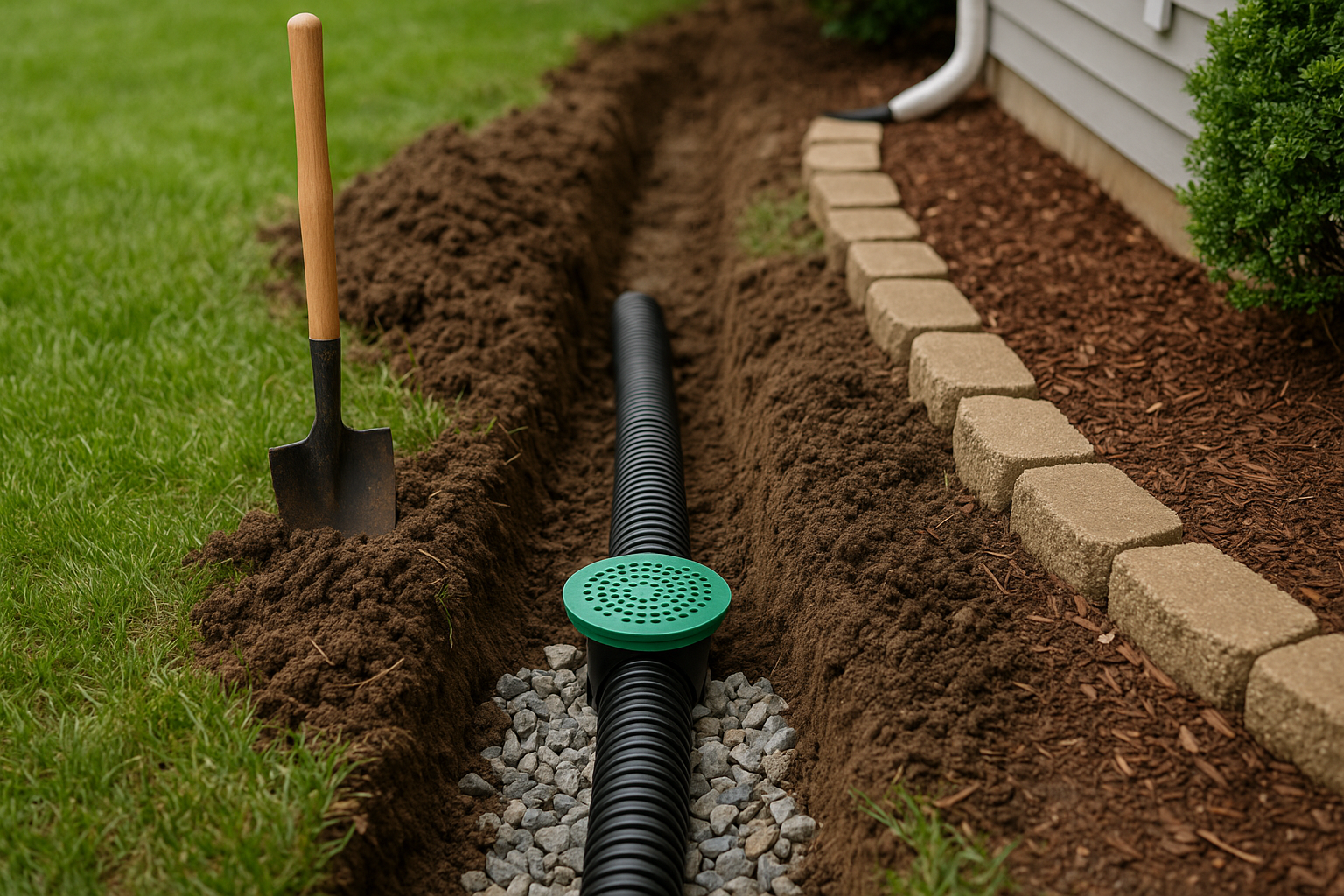
French drains are trenches filled with gravel and a perforated pipe that redirect subsurface water. Dig a trench (slope of at least 1% recommended), line with landscape fabric, add gravel, lay the pipe (holes down), cover with more gravel and topsoil. They’re great for soggy spots near foundations and under patios.
4. Install catch basins and downspout extensions
Catch basins collect surface water and feed it into a pipe system. For simpler fixes, attach extensions to downspouts to carry roof runoff several feet from the foundation or into a rain barrel to reuse water.
5. Dry wells and infiltration systems
Dry wells store runoff temporarily and allow it to soak into the ground. They require proper sizing and spacing—ideal for areas with good infiltration. Use pre-manufactured dry well kits for easier installation.
6. Improve soil and planting choices
Amend compacted clay with compost to improve structure and permeability. Use rain gardens planted with native, water-tolerant species to absorb and slow runoff—an attractive, ecological solution.
Tools, Materials & Estimated Costs
Common tools: shovel, trenching shovel, wheelbarrow, level or transit, tape measure, safety gear. Materials: perforated pipe, gravel, landscape fabric, catch basins, topsoil, plants, downspout extensions. Costs vary: simple fixes (grading, downspout extensions) can be under $100; French drains or dry wells typically range from a few hundred to a couple thousand dollars depending on length and complexity.
Maintenance Tips
- Inspect drains and gutters twice a year and after storms.
- Remove debris and flush pipes as needed to prevent clogging.
- Check that slopes and swales haven’t settled and regrade if necessary.
- Monitor vegetation in rain gardens and replace mulch as needed.
Mistakes to Avoid
- Redirecting water toward neighbors—always consider property lines and local regulations.
- Skipping permits when required for major drainage work.
- Neglecting to compact backfill, which causes future low spots.
- Using the wrong pipe orientation—perforated pipe should have holes facing down.
When to Call a Pro
Hire a contractor if you’re dealing with severe basement flooding, complicated grading near foundations, or if your property requires a major drainage redesign. Pros can handle permits, engineered solutions and extensive excavation safely.
Conclusion
DIY landscape drainage can be rewarding and cost-effective—especially when you start with a clear assessment and a simple plan. Small fixes like grading, downspout extensions and swales often solve common problems, while French drains and dry wells handle more persistent issues. With the right tools, materials and maintenance, you can protect your landscape and home from water damage.