
Backyard Drainage Systems: How to Stop Standing Water and Protect Your Yard
Why Backyard Drainage Matters
If your yard turns into a mini swamp after every storm, you’re not alone. Poor drainage is one of the most common (and frustrating) outdoor problems homeowners deal with. Beyond muddy grass and unusable patio space, standing water can cause real damage—think foundation issues, basement leaks, mold, mosquito breeding, and stressed plants that never quite thrive.
A good backyard drainage system moves water away from your home and directs it to a safe discharge point. The best solutions don’t just “hide” water—they manage it predictably, even during heavy rain.
Common Signs You Need a Drainage System
Some drainage issues are obvious, like puddles that linger for days. Others are subtle but still worth addressing early before they become expensive repairs.
- Standing water in low spots after rain or irrigation
- Soggy or spongy lawn that never fully dries
- Water pooling near the foundation or flowing toward the house
- Erosion or exposed roots on sloped areas
- Algae growth on walkways, patios, or near downspouts
- Basement dampness or musty odors after storms
If you’re seeing any of these regularly, a targeted backyard drainage system can usually fix it without tearing up your entire yard.
Types of Backyard Drainage Systems
There isn’t a one-size-fits-all solution. The right approach depends on your soil type, yard slope, the amount of runoff you receive, and where you can safely send water.
French Drains
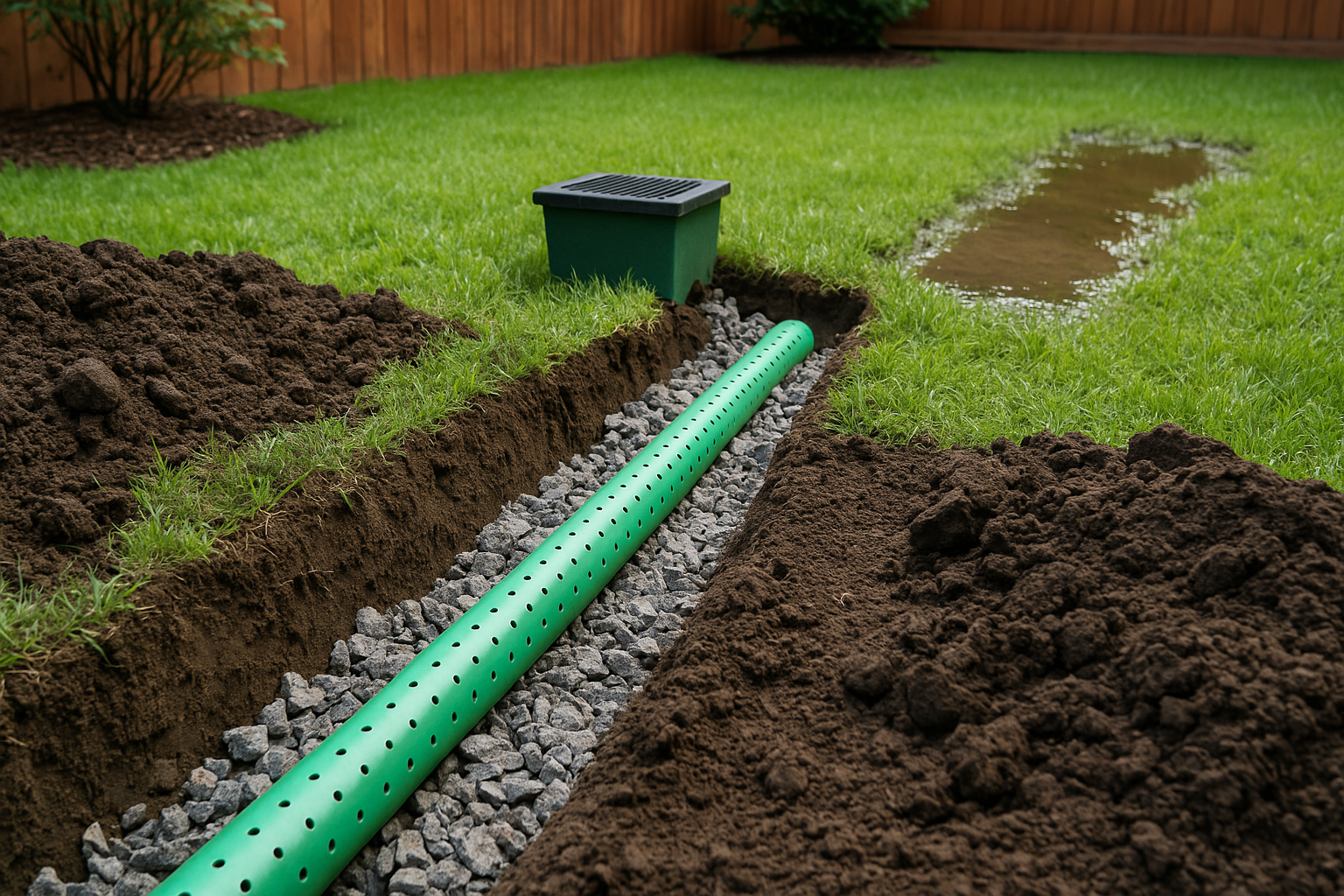
A French drain is one of the most popular backyard drainage systems for a reason: it’s versatile and effective. It typically consists of a trench filled with gravel and a perforated pipe that collects and redirects water away from problem areas.
Best for: soggy lawns, water collecting along the house, and general groundwater management.
Pros: hidden once installed, long-lasting, handles persistent wet areas well.
Watch-outs: needs proper slope and a good discharge point; can clog if installed without filter fabric or cleanouts.
Channel (Trench) Drains
Channel drains are surface drains—long, narrow basins covered by a grate. They catch water running across hardscapes like patios, driveways, pool decks, and walkways, then route it away through a connected drain line.
Best for: patios and paved areas where water sheets across the surface.
Pros: excellent for preventing slippery, puddled hardscapes; easy to spot and maintain.
Watch-outs: visible grates may not match every landscape style; must be installed level with the surface.
Dry Wells
A dry well is essentially a buried “holding area” that collects runoff and lets it slowly soak into the surrounding soil. It’s often paired with downspouts or French drains to manage roof water.
Best for: properties that can infiltrate water (sandy or loamy soils) and have room away from the foundation.
Pros: reduces runoff and erosion; can be tucked out of sight.
Watch-outs: not ideal for heavy clay soils; needs enough depth and distance from structures.
Catch Basins
Catch basins are box-shaped drains with a grate on top that collect surface water and trap debris in a sump. They’re useful at low points where water naturally gathers.
Best for: low spots, yard corners, and areas fed by multiple runoff paths.
Pros: great at capturing leaves and sediment before they enter your drain lines.
Watch-outs: needs periodic cleaning; placement matters—install at true low points for best performance.
Swales and Grading
Sometimes the most effective “system” is reshaping the land. Swales are shallow, gently sloped channels that guide water toward a safe area, often blended into the landscape with grass or stone.
Best for: yards with mild slopes, broad runoff issues, or where you want a more natural-looking solution.
Pros: can look seamless; often cheaper than extensive piping.
Watch-outs: requires space and careful grading; may not solve high groundwater issues alone.
Rain Gardens
A rain garden is a planted basin designed to collect stormwater and absorb it naturally. With the right soil mix and water-tolerant plants, it can turn a drainage problem into a landscape feature.
Best for: eco-friendly homeowners and yards where water can be directed to a dedicated planting zone.
Pros: attractive, supports pollinators, reduces runoff.
Watch-outs: must be sized properly; needs the right plants and soil preparation to avoid becoming a soggy mess.
How to Choose the Right Drainage Solution
Choosing the best backyard drainage system comes down to diagnosing where the water is coming from and where it needs to go. A few practical considerations make the decision clearer.
- Identify the source: Is the water from roof runoff (downspouts), a neighboring property, or groundwater?
- Check soil type: Clay holds water longer; sand drains quickly. This affects whether infiltration options (like dry wells) will work.
- Look at slope: Drainage piping needs consistent pitch. If your yard is flat, you may need regrading, surface drains, or a sump pump setup.
- Pick a safe discharge point: Daylight to a lower area, a street curb cut (where allowed), or another approved outlet. Always follow local rules.
- Think long-term maintenance: Systems with grates and sumps are easier to clean; buried systems benefit from cleanouts.
If you’re unsure, a quick site assessment from a landscape drainage specialist can save a lot of trial and error.
Installation Basics and Best Practices
Even the best drainage design can fail if it’s installed incorrectly. Here are the fundamentals that make backyard drainage systems work reliably:
- Maintain proper slope: Many drain lines need a steady pitch so water keeps moving instead of sitting in the pipe.
- Use quality materials: Solid pipe for transporting water, perforated pipe for collecting it, and durable fabric to reduce clogging.
- Plan for cleanouts: Adding accessible cleanouts makes it easier to flush lines if sediment builds up.
- Keep water away from the foundation: Downspouts should discharge far from the house, and systems should not dump water right next to footings.
- Protect against debris: Leaf guards, catch basin sumps, and proper gravel layers help prevent blockages.
DIY installation can work for small projects, but larger drainage problems often require professional grading tools and a well-thought-out discharge plan.
Maintenance Tips to Keep Your System Working
Backyard drainage isn’t “set it and forget it.” A little upkeep goes a long way, especially after storms or during fall leaf season.
- Clear grates and remove leaves, mulch, and sediment after heavy rain.
- Empty catch basin sumps as needed to prevent clogs downstream.
- Flush drain lines periodically if you notice slow drainage.
- Check discharge points to make sure water is flowing freely and not causing erosion.
- Revisit grading if you add patios, walkways, or new garden beds that change runoff paths.
Conclusion: A Drier Yard Is a More Usable Yard
The right backyard drainage system can transform how you use your outdoor space—no more muddy patches, standing water, or runoff heading toward your home. Start by identifying the source and flow of water, then choose a solution that fits your soil, slope, and landscape goals. With smart design and basic maintenance, you can protect your property and enjoy a yard that’s ready for anything the weather brings.