
Stone Retainer Wall: Design, Build, and Maintain a Durable Landscape Feature
What Is a Stone Retainer Wall?
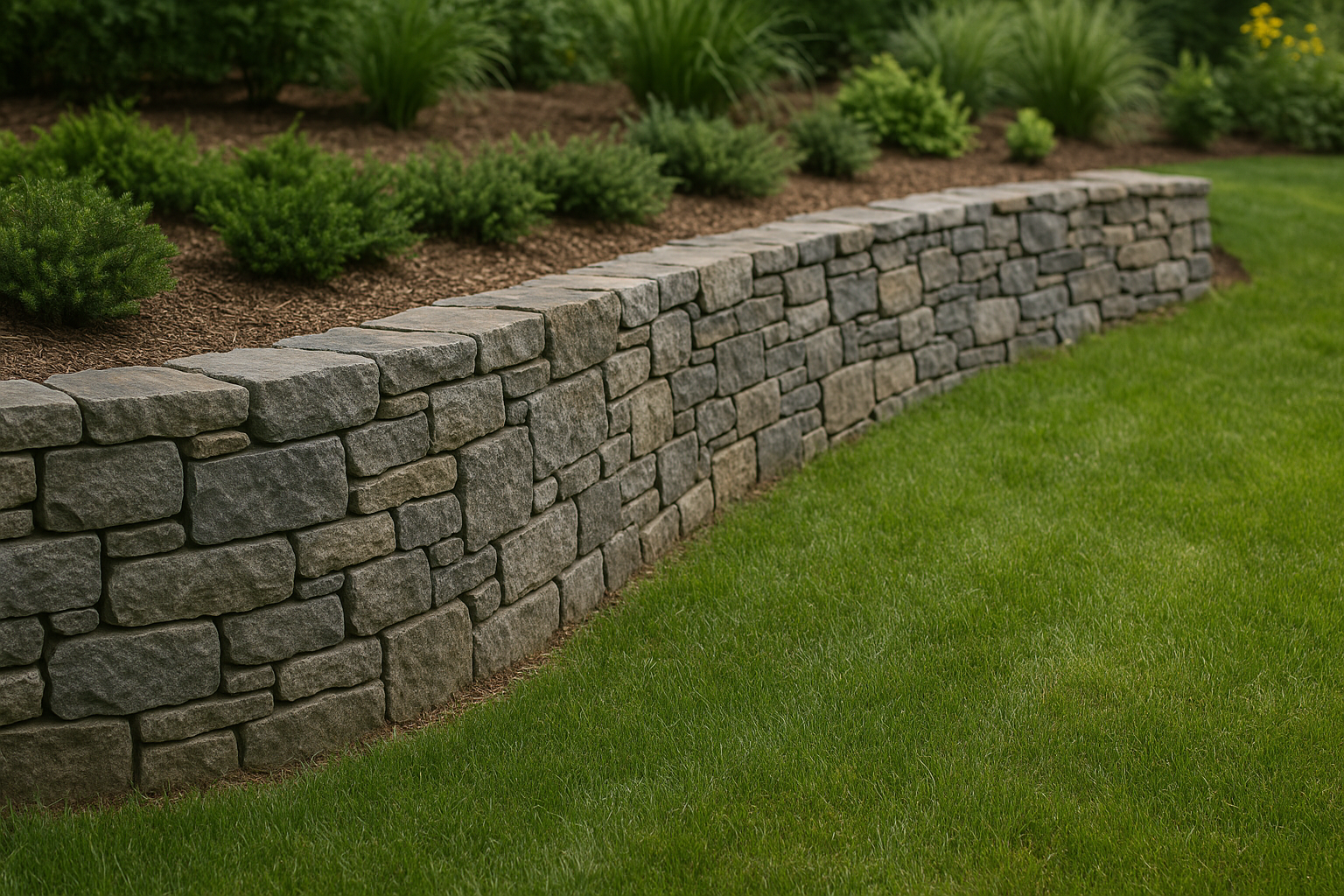
A stone retainer wall (often called a stone retaining wall) is a structural landscape element designed to hold back soil on sloped terrain. Beyond preventing erosion, it creates flat planting beds, terraces, and usable outdoor areas. Natural stone is one of the most attractive and durable choices for these features, offering texture, color variety, and long-term performance.
Benefits of Choosing Stone
Durability and Longevity
Natural stone resists weathering and requires minimal long-term maintenance. When built correctly, a stone wall can last decades or even centuries.
Aesthetic Appeal
Stone integrates naturally with landscapes, complementing plantings and architecture. You can select fieldstone, quarried stone, or ledgestone to achieve rustic or refined looks.
Value Addition
Well-designed stone retaining walls increase curb appeal and property value, especially when they frame garden beds, pathways, or terraces.
Types of Stone Retainer Walls
Dry-Stack Stone Walls
Built without mortar, dry-stack walls rely on careful stone selection and placement. They allow drainage through the wall and flex slightly with ground movement, reducing cracking.
Mortared Stone Walls
Mortared walls use cement or lime mortar between stones for a solid, sculpted appearance. They provide a rigid structure suitable for higher loads but require a proper foundation and drainage to prevent pressure buildup.
Gabion Walls with Stone Facing
Gabions are wire baskets filled with stone; they’re an option where speed and erosion control are priorities. You can combine gabions with natural stone facing for a refined look.
Design Considerations
Height and Slope
For walls under 3 feet, homeowners can often handle the project with basic tools. Taller walls generally require engineered plans and professional installation due to lateral soil pressure and safety concerns.
Drainage and Backfill
Proper drainage is the most important factor in retaining-wall longevity. Use free-draining backfill (gravel or crushed stone) and incorporate a perforated drain pipe at the base to channel water away from the wall.
Foundation and Footing
A compacted stone or gravel footing provides stable support. For mortared walls, a concrete footing sized by wall height is typically required to prevent settlement.
Materials and Tools
- Stone types: fieldstone, limestone, granite, bluestone, or quarried ledgestone
- Backfill: 3/4″ crushed stone, gravel, or rock
- Drainage pipe: 4″ perforated PVC or corrugated pipe wrapped in filter fabric
- Mortar and cement (if mortaring)
- Tools: shovel, tamper, level, masonry chisel, wheelbarrow, gloves, safety glasses
Basic Construction Steps (Dry-Stack)
- Plan and mark the layout—check local codes and utility locations first.
- Excavate a trench for the footing and level the base. Depth depends on wall height; typically 6–12 inches for low walls.
- Compact and add a gravel footing for drainage and stability.
- Place the largest, flattest stones for the first course. Set them slightly tilted back into the slope (batter) for stability.
- Continue laying stones, staggering joints and stepping back each course by about 1″ for every foot of wall height.
- Install drain pipe behind the footing if needed, and backfill with gravel, then topsoil for planting.
Maintenance Tips
- Check for bulging, leaning, or settlements annually—early fixes are cheaper than major repairs.
- Keep vegetation and tree roots from growing directly behind or into the wall—roots can displace stones.
- Ensure drainage remains clear; flush or replace clogged drain pipe and maintain surface runoff paths away from the wall.
- Repoint mortared joints as mortar weathers; use compatible mortar to avoid damaging the stone.
Cost Considerations
Costs vary widely based on stone type, wall height, labor, and site conditions. DIY dry-stack walls reduce labor costs but demand time and skill. Expect higher prices for quarried stone and mortared installations. Get multiple quotes and consider long-term value—quality construction reduces future repair costs.
Permits and Safety
Local building codes often regulate retaining walls above certain heights. Always check permit requirements before starting. For walls that retain significant soil or are near structures, hiring an engineer and licensed contractor keeps the project safe and code-compliant.
When to Hire a Professional
Call a pro if your wall will be higher than 3–4 feet, supports structures like driveways or foundations, or if soil conditions are poor (e.g., clay or expansive soils). Professionals provide proper drainage design, engineered footings, and warranties.
Conclusion
A stone retainer wall is a beautiful, practical investment that adds usable space and character to your landscape. With careful planning—right materials, drainage, and foundation—you can enjoy a durable feature that blends naturally with your outdoor environment. Whether you take on a small dry-stack project or hire professionals for a larger installation, prioritize drainage and structural stability for the best long-term results.