
Solar Landscape Lights: Brighten Your Yard with Renewable, Low-Maintenance Lighting
Introduction to Solar Landscape Lights
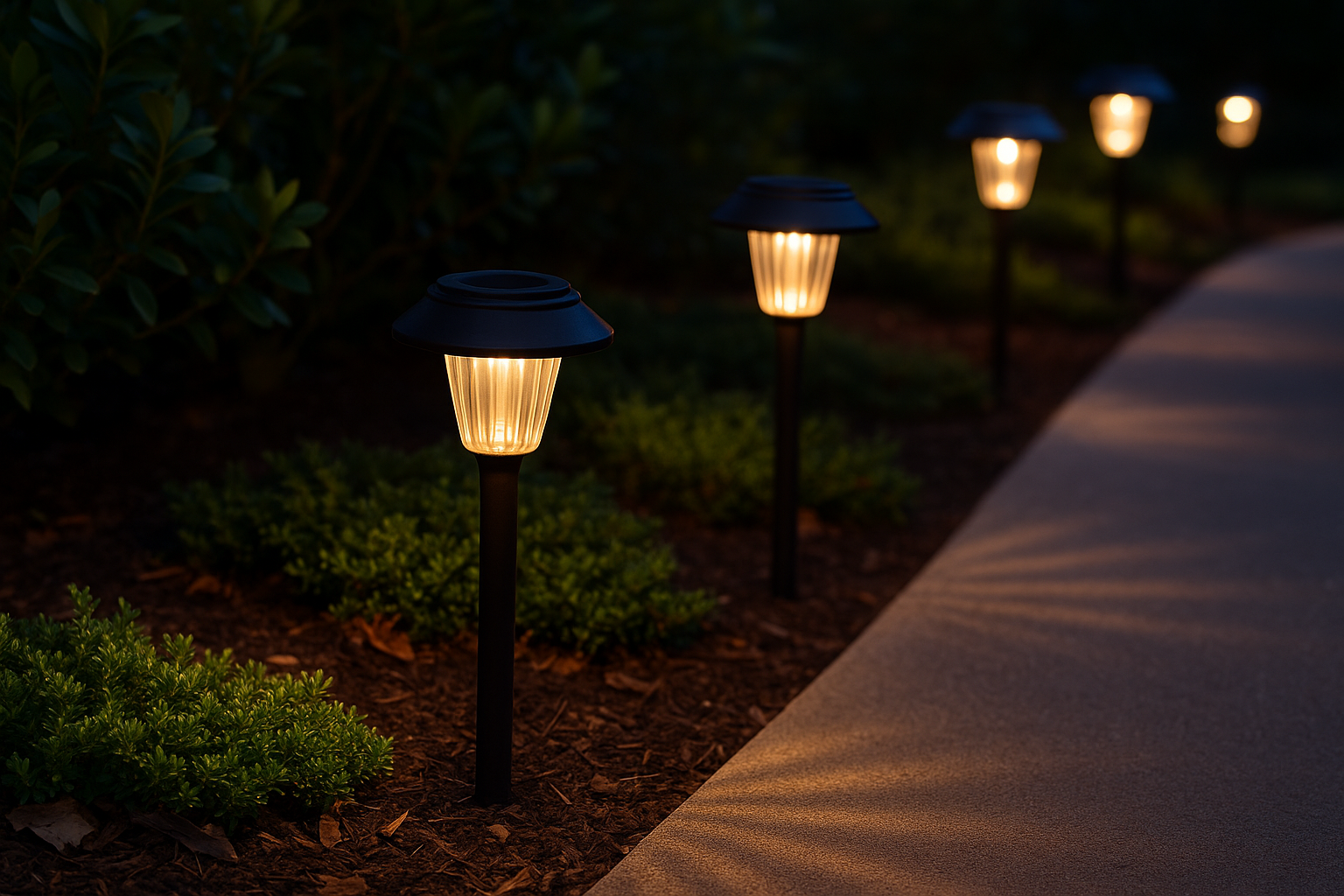
Solar landscape lights are an eco-friendly, cost-effective way to illuminate pathways, highlight garden features, and add ambience to outdoor living spaces. Powered by onboard solar panels and rechargeable batteries, these lights charge during the day and automatically turn on at dusk, offering a simple plug-free solution for almost any yard.
How Solar Landscape Lights Work
Solar panels and batteries
Each fixture contains a small photovoltaic panel that converts sunlight into electricity. That energy is stored in a rechargeable battery (usually NiMH or Li-ion) and powers an LED after dark. Most models include a light sensor to switch on and off automatically.
LED technology
LEDs are the standard light source because they use very little power and last for thousands of hours. That efficiency helps solar lights run longer through the night even with modest sun exposure.
Benefits of Solar Landscape Lights
- Energy savings: No electricity usage reduces utility bills.
- Easy installation: No wiring means faster, safer setup.
- Low maintenance: Periodic battery swaps and cleaning are usually all that’s needed.
- Versatility: Available in many styles—path, spot, flood, and decorative lights.
- Environmentally friendly: They reduce carbon footprint by using renewable energy.
Types of Solar Landscape Lights
Path and stake lights
Designed to line walkways and driveways, these stake lights typically provide soft, diffuse illumination to guide foot traffic and define garden edges.
Spotlights and floodlights
Spotlights deliver focused beams to highlight trees, sculptures, or architectural features. Flood-style solar lights offer broader coverage for larger areas.
String lights and lanterns
String lights create ambience for patios or pergolas, while solar lanterns can be hung or placed on tables for a cozy glow.
Wall and step lights
These fixtures mount to vertical surfaces or steps to improve safety and add visual interest to patios, decks, and entryways.
How to Choose the Right Solar Landscape Lights
Consider brightness and color temperature
Brightness is measured in lumens. For pathway use, 10–50 lumens per fixture is usually sufficient; spotlighting a feature may need 100 lumens or more. Color temperature affects mood—warm white (2700–3000K) feels cozy, while cool white (4000K+) looks crisp and modern.
Assess battery capacity and runtime
Battery size determines how long lights will run after a full charge. If your yard gets inconsistent sunlight, look for lights with higher-capacity batteries or energy-saving modes.
Durability and weather resistance
Choose fixtures rated for outdoor use. An IP rating (e.g., IP65) indicates dust and water protection. Sturdier materials like stainless steel or heavy-duty plastic will last longer in harsh climates.
Solar panel placement
Lights with separate or adjustable panels can be positioned for better sun exposure. If your landscape has shade from trees or buildings, adjustable panels will significantly improve performance.
Installation and Placement Tips
- Place lights where they will receive at least 4–6 hours of direct sunlight daily for optimal charging.
- Angle panels to face south (in northern hemisphere) or north (in southern hemisphere) to maximize sunlight capture.
- Avoid placing lights under dense foliage or on north-facing walls that receive little sun.
- Test locations at dusk before final installation to ensure desired light coverage and aesthetic effect.
Maintenance and Troubleshooting
Routine cleaning
Wipe solar panels periodically to remove dust, pollen, or bird droppings that reduce charging efficiency. Clean fixtures with mild soap and water.
Battery care and replacement
Batteries typically last 1–3 years depending on type and climate. Replace rechargeable batteries with the manufacturer’s recommended size and chemistry to maintain performance.
Common problems and fixes
- Dim lights: Check for shaded panels, dirty surfaces, or aged batteries.
- Lights won’t turn on: Verify the light sensor isn’t accidentally covered and test the on/off switch. Replace battery if necessary.
- Short runtime: Lower power mode settings or upgrade to larger batteries and reposition panels for more sun.
Creative Design Ideas
Mix different solar fixtures to create layered lighting—soft path lights for guidance, spotlights for focal points, and string lights for ambience. Use warm white tones for cozy seating areas and brighter cool lights to accent architectural features. Clustering a few statement solar lanterns near an entry or water feature can create an inviting focal point.
Conclusion
Solar landscape lights offer an affordable, sustainable way to enhance safety and beauty in your outdoor spaces. With thoughtful selection, strategic placement, and simple maintenance, these lights can reliably brighten your yard year after year while keeping installation and energy costs low.