
Retainer Wall Installation: A Practical Guide to Planning, Building, and Long-Lasting Results
Understanding Retainer Wall Installation
A well-built retaining wall does more than look nice—it solves real landscaping problems. Retainer wall installation (often called retaining wall installation) helps manage sloped yards, prevent soil erosion, create usable flat space, and protect structures like patios and driveways from shifting ground. Whether you’re upgrading curb appeal or tackling a drainage issue, the key is building it correctly from the ground up.
Before you start digging, it helps to understand what a retaining wall is designed to do: resist the lateral pressure of soil and water behind it. That pressure is exactly why drainage, base prep, and proper materials matter so much. A “pretty wall” that isn’t engineered for the load can lean, crack, or fail over time.
Planning Your Retainer Wall: Permits, Design, and Materials
Great results start with a solid plan. This stage can save you from common headaches like unexpected utility lines, water pooling behind the wall, or building something that doesn’t meet local requirements.
Check local codes and permits
Many municipalities have rules for retaining walls, especially when they exceed a certain height (often around 3–4 feet, but it varies). Depending on your area, you may need a permit, inspections, or even a stamped design from an engineer. If your wall will be near a property line, fence, driveway, or public walkway, it’s also smart to confirm setback rules.
Choose the right wall type
Retaining walls come in several styles. The best option depends on height, budget, appearance, and the amount of soil pressure expected.
- Segmental retaining walls (SRW): Interlocking concrete blocks; popular for durability and DIY-friendly installation.
- Poured concrete: Strong and clean-looking, but typically requires forms and more specialized skills.
- Natural stone: Beautiful and timeless; installation can be labor-intensive and often costs more.
- Treated timber: Budget-friendly and rustic, but generally shorter lifespan and more susceptible to moisture issues.
Plan drainage from day one
Water is one of the biggest reasons retaining walls fail. During planning, decide how water will move behind and away from the wall. Most successful retaining wall installations include a gravel backfill zone, a perforated drain pipe (often called “drain tile”), and a fabric layer to reduce clogging from sediment.
Step-by-Step Retainer Wall Installation Process
While details vary by material, most retaining wall projects follow the same core steps. If you’re hiring a contractor, understanding this process helps you evaluate quotes and confirm the work is being done correctly.
1) Layout and excavation
Start by marking the wall line with stakes and string. For curved walls, a garden hose or marking paint makes it easier to visualize the shape. Excavation typically includes:
- Digging a trench for the base course
- Removing organic soil (topsoil, roots, debris)
- Creating enough depth for base material plus the first course to be partially buried
A common mistake is not excavating deep enough. That first course needs to sit low and solid—this is what keeps the wall from sliding and helps it look level once finished.
2) Base preparation and compaction
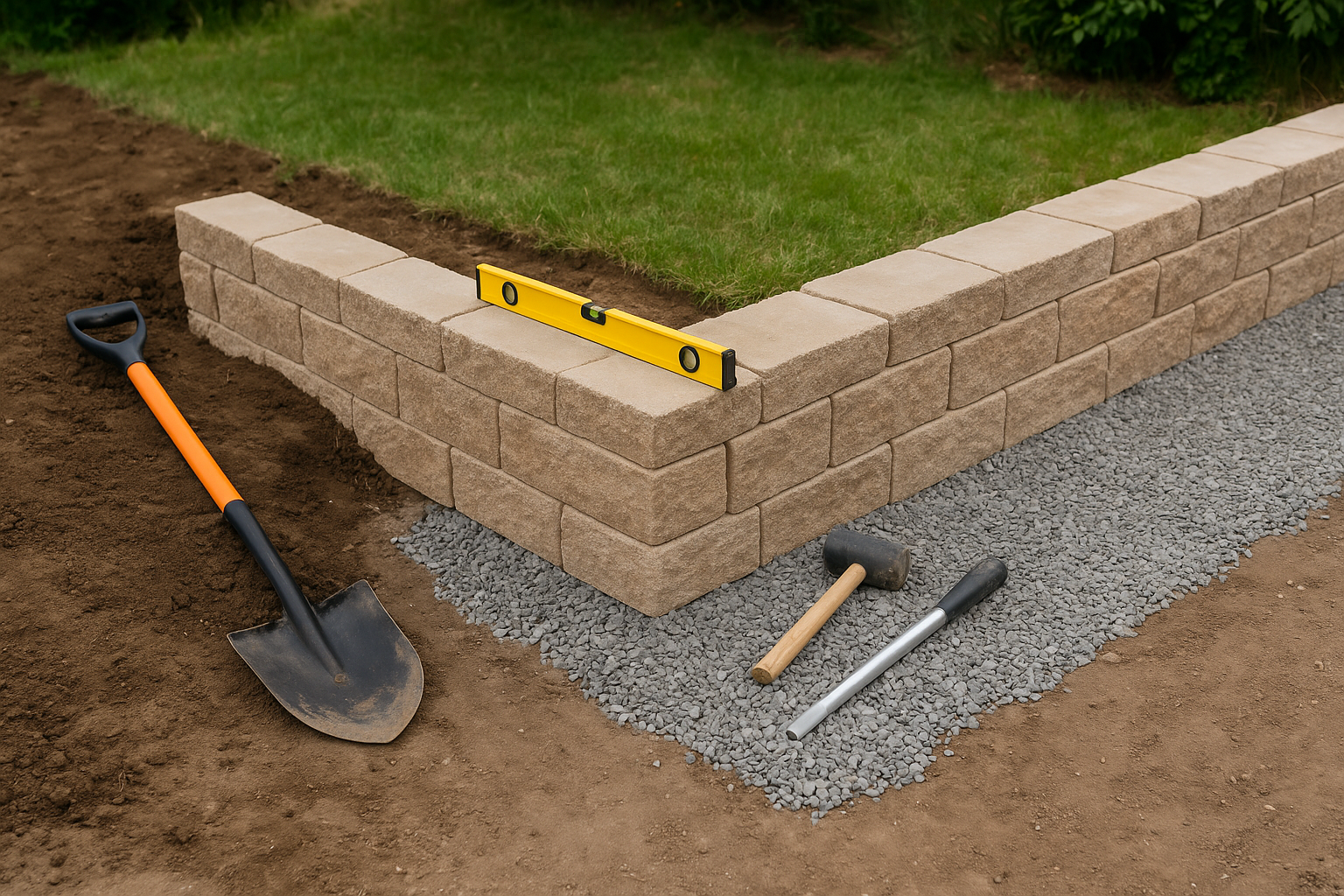
The base is the foundation of the wall. Typically, contractors use compacted crushed stone (often called “road base” or “paver base”), not round river rock. Crushed stone locks together and compacts firmly.
The base is added in layers and compacted with a plate compactor. Taking your time here pays off: an uneven or soft base can lead to settling, bulging, and crooked courses.
3) Install the first course (the most important course)
The first row of blocks or stones should be set carefully and leveled front-to-back and side-to-side. This course sets the tone for the entire wall. For segmental blocks, you’ll often remove any raised lips on the base row (depending on the block design) so it sits flat and level.
Tip: It’s normal to spend more time on the first course than you expect. A perfectly set first course makes stacking the rest much smoother.
4) Build up courses and stagger joints
As you stack additional courses, stagger vertical joints like brickwork to improve strength and appearance. Clean debris off each layer before placing the next—small stones can cause blocks to rock, creating tiny gaps that turn into bigger alignment issues.
Many segmental systems also have a built-in setback (each course steps back slightly), which helps the wall resist soil pressure.
5) Add drainage gravel, fabric, and drain pipe
Behind the wall, install a drainage system that keeps hydrostatic pressure from building up. A common approach includes:
- Filter fabric: Separates native soil from drainage gravel to help prevent clogging.
- Drainage gravel: A clear crushed stone zone behind the wall for water to flow through.
- Perforated drain pipe: Placed near the base, sloped to daylight or a suitable outlet.
For taller walls, contractors may add geogrid reinforcement—layers of engineered mesh extending into the slope behind the wall to increase stability.
6) Backfill and compact in lifts
Backfilling isn’t just “dumping dirt.” It should be done gradually in layers (often called lifts), compacting as you go. This reduces settling and improves overall wall performance. The soil type matters too—heavy clay holds water and increases pressure, while well-draining fill is usually a better choice behind the drainage zone.
7) Cap the wall and finish grading
Caps give the wall a clean, finished look and help protect the top course. Caps are typically adhered with exterior-rated construction adhesive. Once capped, finish grading the area so water runs away from the wall, not toward it. Proper grading is the final step that supports everything you’ve built.
Common Mistakes to Avoid
Even a small retaining wall can run into trouble if a few fundamentals are skipped. Here are the most common issues to watch for:
- Skipping or undersizing drainage: Water pressure builds fast and can push a wall outward.
- Inadequate base depth or poor compaction: Leads to settling and uneven courses.
- Using the wrong backfill: Heavy, wet soil increases lateral pressure.
- Building too tall without reinforcement: Taller walls may require geogrid and engineering.
- Not accounting for slopes and water flow: Surface runoff should be directed away from the wall.
DIY vs. Hiring a Pro: What’s Best for Your Project?
For small garden walls or short landscape borders, a DIY retaining wall can be realistic if you’re comfortable with excavation, compaction, and leveling. However, as height and complexity increase, professional installation becomes the safer investment.
Consider hiring a pro if:
- The wall is over local permit thresholds or near structures
- Your site has poor drainage, heavy clay, or tricky slopes
- You need geogrid reinforcement or engineered plans
- You want a clean, long-lasting finish with minimal risk of callbacks
A reputable contractor should explain drainage plans, base thickness, reinforcement (if needed), and how they’ll compact and backfill. If those details are vague, that’s a red flag.
Conclusion
Successful retainer wall installation comes down to smart planning, a properly compacted base, and reliable drainage. When those essentials are done right, your retaining wall can stay straight, strong, and attractive for years. Whether you DIY a smaller wall or bring in a professional for a larger build, focusing on fundamentals is the best way to protect your yard—and your investment.