
Retainer Wall Construction: Practical Guide to Design, Materials, and Installation
Introduction
Retainer wall construction is a cornerstone of landscape and civil engineering. Whether you’re stabilizing a slope, creating terraced gardens, or protecting foundations, a well-designed retaining wall keeps soil in place and prevents erosion. This guide walks you through types of walls, planning and materials, drainage, construction steps, common mistakes, and maintenance tips to help you build a durable, attractive retainer wall.
Types of Retaining Walls
Choosing the right type of wall depends on height, soil conditions, budget, and desired aesthetics. Common options include:
- Gravity walls: Rely on mass (stone, concrete block) to resist soil pressure.
- Reinforced walls: Use geogrid or tiebacks for extra strength, ideal for taller walls.
- Sheet pile walls: Thin panels driven into the ground for tight or waterfront sites.
- Gabion walls: Wire baskets filled with rock—flexible and permeable.
- Timber walls: Economical and attractive for low-height landscaping, but shorter lifespan.
Planning & Design Considerations
Good planning reduces the chance of failure. Before construction:
- Assess soil type and drainage characteristics; clay, sand, and silt behave differently under load.
- Determine wall height and load conditions (surcharges, adjacent structures, vehicles).
- Check local codes and permitting requirements—some walls need engineered designs.
- Decide on the finish and integration with landscape elements like stairs or planters.
Materials & Construction Methods
Each material has pros and cons—choose based on durability, budget, and appearance.
Concrete Block
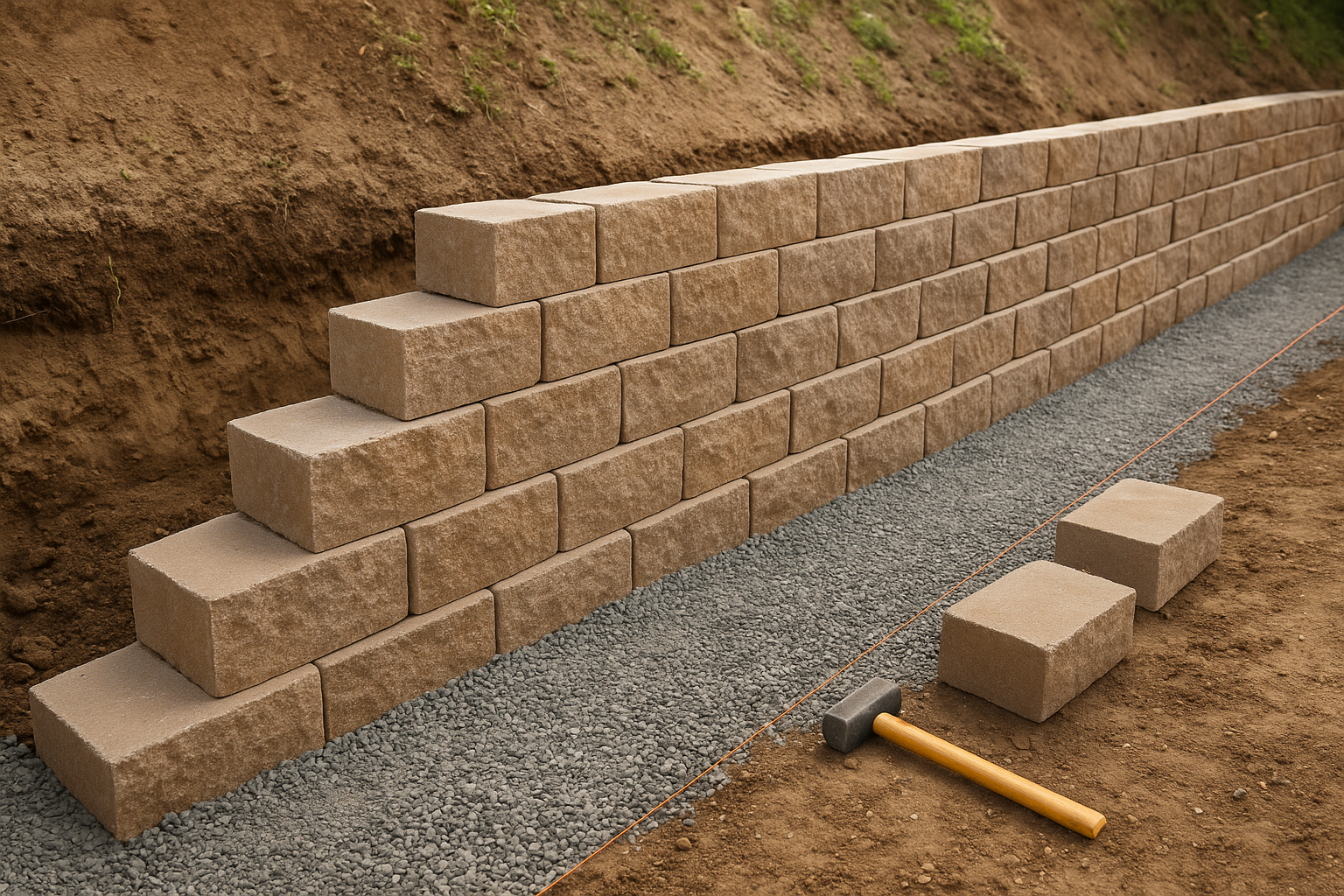
Segmental retaining wall (SRW) blocks are popular for DIY and pro projects. They interlock, require minimal mortar, and are designed with setback and drainage in mind. For walls over a certain height, use geogrid reinforcement and follow manufacturer instructions.
Poured Concrete
Poured concrete offers strength and versatility for curved or structural walls. It can be formed with weep holes and tied into footings. This method usually requires professional formwork and quality control on drainage.
Timber
Pressure-treated timber is cost-effective and easy to install for low walls. Timber is susceptible to rot over time and is best for small landscape features rather than long-term, high-load applications.
Gabion & Stone
Gabions are flexible and permeable, reducing hydrostatic pressure concerns. Natural stone builds a beautiful, long-lasting wall but is labor-intensive and typically more expensive.
Drainage & Backfill
Proper drainage is the most critical factor in retaining wall longevity. Water increases pressure behind the wall and is a common failure cause.
Drainage Systems
Include a perforated drain pipe at the base, wrapped in filter fabric, and direct water away from the wall. Weep holes and backfill drainage stone allow water to escape rather than build hydrostatic pressure.
Backfill Materials
Use granular, free-draining backfill like crushed stone or gravel directly behind the wall. Avoid clay or organic soil near the base; place topsoil further back if you need planting areas.
Step-by-Step Construction Overview
These are general steps—follow manufacturer specifications and engineer recommendations for structural walls.
- Site preparation: Clear vegetation, establish grades, and mark the wall line.
- Excavation and footing: Excavate to a stable subgrade and install a compacted gravel base or concrete footing depending on wall type.
- Base layer: Set the first course of blocks or foundation stones level and well-compacted—this is the most important layer for stability.
- Build and reinforce: Stack or pour the wall, install geogrid or anchors where required, and place drainage pipe and stone behind the wall.
- Backfill and compact: Add backfill in layers, compacting each lift. Avoid heavy compaction directly adjacent to delicate block faces.
- Finish: Cap the wall, dress the site, and connect drainage to a safe outlet.
Common Mistakes & Maintenance
Avoid these pitfalls:
- Neglecting drainage—this leads to hydrostatic failure.
- Skipping adequate base compaction—causes settlement and leaning.
- Using inappropriate backfill (clay) directly behind the wall.
Maintenance tips: keep drains clear, monitor for movement or bulging, and repair mortar or joints in stone or concrete walls promptly. Vegetation can look great but watch root systems that may exert pressure.
Cost & Timeline
Costs vary widely by material, height, site access, and engineering needs. A simple small timber wall could be installed in a day or two, while engineered concrete walls may take several weeks including curing and inspections. Always get multiple quotes and consider lifecycle costs—cheaper materials today can mean higher maintenance or replacement sooner.
Conclusion
Retainer wall construction combines practical engineering with landscape design. Prioritize proper drainage, choose materials suited to your site, and use qualified design or installation help for taller or load-bearing walls. With thoughtful planning and maintenance, a well-built retaining wall can provide function and curb appeal for decades.