
Pond Landscaping Rocks: How to Choose, Place, and Maintain the Perfect Stones
Why Pond Landscaping Rocks Matter
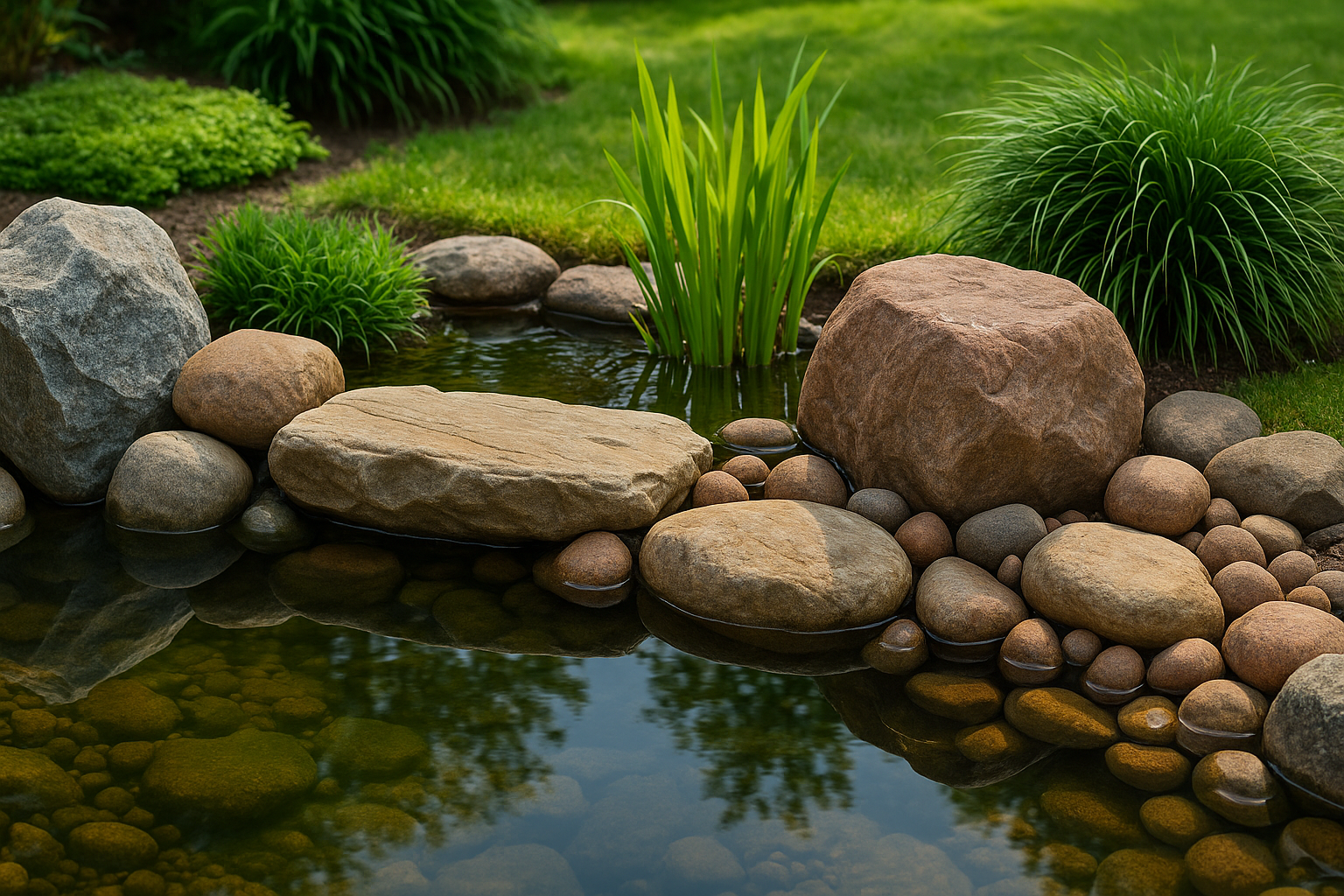
Rocks are the backbone of any great pond design. They provide structure, create natural transitions between water and garden, support plants and wildlife, and contribute to your pond’s aesthetic and long-term stability. Choosing the right types of rocks and placing them thoughtfully can make the difference between a hobby pond and a picturesque water garden that looks like it’s been part of the landscape for decades.
Types of Rocks for Ponds
Different rocks serve different functions. Understanding the most common options helps you plan for form, function, and budget.
Boulders
Boulders are large, statement-making stones used for focal points, natural-seeming edges, or anchoring waterfalls. They add permanence and visual weight. When choosing boulders, look for irregular shapes and natural color variation to avoid a “placed” look.
River Rock and Cobbles
River rock is rounded and smooth, ideal for edging, shallow shelves, or stream beds. Its polished appearance helps water flow smoothly and reduces algae build-up on rough surfaces. Cobbles (larger rounded stones) work well where you want more texture and scale.
Pea Gravel and Small River Pebbles
Smaller stones like pea gravel are great for shallow margins, walkways around the pond, and accenting planting pockets. They’re inexpensive, easy to work with, and help with drainage.
Slate and Flagstone
Flat stones such as slate or flagstone are perfect for creating stepping stones, ledges for plants, or seating areas adjacent to the pond. They provide smooth, wide surfaces and a contemporary look when used in clean lines.
Crushed Rock and Aggregate
Crushed rock is useful beneath liners for leveling and stability or mixed into substrate for planted shelves. Avoid sharp, angular stones directly on exposed liner edges to prevent punctures.
Design Tips for Using Rocks
Good design blends rocks with plants, water features, and surrounding landscape to create a cohesive, natural look.
Build Natural Transitions
Vary rock sizes and mix textures along the shoreline. Start with boulders at focal points, move to cobbles and river rock, and finish with pea gravel or mulch behind the planting zone. This gradation mimics natural lakeshores and looks intentional.
Create Waterfalls and Streams
Stack rocks to form cascades and use flatter stones to shape the water path. Boulders and large cobbles guide flow, while smaller rocks create sound and reduce splash. Ensure a solid base under each rock to prevent shifting.
Use Rocks as Planting Pockets
Place flat rocks or stones with gaps to create pockets for bog plants and marginal species. Rocks help retain substrate and shade roots, benefiting moisture-loving plants.
Placement & Installation
Proper preparation ensures longevity and safety.
Prepare the Base
Excavate and level the pond edge before placing heavy stones. Use a layer of sand or compacted crushed stone beneath large rocks to prevent settling. If you have a liner, protect it with a geotextile underlay and avoid dragging heavy stones across it.
Anchor and Stabilize
Set large stones partially into the ground for a natural look and to prevent movement. For waterfall rocks, use mortar sparingly or interlock stones so they support each other—this keeps the structure stable while preserving a natural appearance.
Maintenance & Safety
Rocks are relatively low maintenance, but a few simple routines will keep your pond healthy and attractive.
Algae and Cleaning
Algae can accumulate on rock surfaces, especially where sunlight hits. Use a soft-bristled brush or a pond-safe algae remover when needed. Avoid harsh chemicals that can harm plants and wildlife.
Wildlife and Pet Safety
Create gentle slopes and shallow ledges with smooth stones to allow wildlife and pets to access and exit the water easily. Avoid sharp, jagged rocks near frequently used edges.
Where to Source Rocks & Budget Tips
Local quarries, landscape supply yards, and stone dealers are often the best places to find quality rocks at reasonable prices. Salvage yards, farm auctions, or community marketplaces can be treasure troves for unique stones. For big, heavy pieces, factor in delivery and placement costs—renting a small excavator or hiring experienced landscapers might be worth it for safety and efficiency.
Mistakes to Avoid
- Placing heavy rocks on top of liners without protection—this risks punctures.
- Using only one rock type—variety creates a more natural feel.
- Ignoring slope and stability—unanchored stones can shift and damage liners or structures.
- Overlooking wildlife access—steep, vertical edges can trap animals.
Conclusion
Pond landscaping rocks are more than decorative elements—they shape the pond’s function, safety, and natural appearance. By choosing a mix of boulders, river rock, and flatter stones, preparing a stable base, and blending rocks with plants, you’ll create a timeless water feature that supports wildlife and delights the eye. Start small, plan carefully, and enjoy the process of turning stone and water into a harmonious backyard retreat.