
Natural Drainage Landscaping: Practical Techniques for Managing Water Naturally
Introduction
Natural drainage landscaping transforms how your yard handles rain and runoff by using plants, soil, and gentle landforms to slow, infiltrate, and direct water. Rather than relying solely on pipes and concrete, natural drainage designs mimic nature to reduce erosion, recharge groundwater, and create attractive outdoor spaces. This guide walks through the core techniques, planning steps, plant choices, and maintenance tips to help you design a functional and beautiful landscape that manages water smartly.
Why Choose Natural Drainage Landscaping?
Natural drainage goes beyond aesthetics. It provides environmental and practical benefits that improve your property and community:
- Reduces stormwater runoff and downstream flooding.
- Filters pollutants before they reach waterways.
- Promotes groundwater recharge and healthier soils.
- Creates wildlife habitat and increases biodiversity.
- Often lowers long-term maintenance needs compared to hard drainage systems.
Key Elements of Natural Drainage
Swales
Swales are shallow, vegetated channels that slow and capture stormwater. By directing water along a gently sloped path, swales give it time to infiltrate and settle sediment. Consider connecting swales to rain gardens or dry creek beds to handle concentrated flows.
Rain Gardens
Rain gardens are shallow basins planted with moisture-tolerant native species. They collect roof and surface runoff, allowing water to soak into the ground rather than running into drains. Proper soil mix and siting are essential so the garden drains within 24–48 hours.
Permeable Surfaces
Permeable paving, gravel, and stepping stones reduce hard surfaces that create runoff. Use permeable materials on driveways, patios, and walkways to let water soak into the soil where it falls.
Native Plants and Deep-Rooted Vegetation
Native plants adapted to local climate and soils have deep root systems that improve infiltration and stabilize slopes. Grasses, sedges, and woody shrubs can all play a role in capturing and filtering runoff.
Grading and Contours
Subtle grading guides water toward designed features without causing erosion. Contouring the land can create micro-basins and terraces that slow flow and encourage infiltration.
Dry Creek Beds and Bioswales
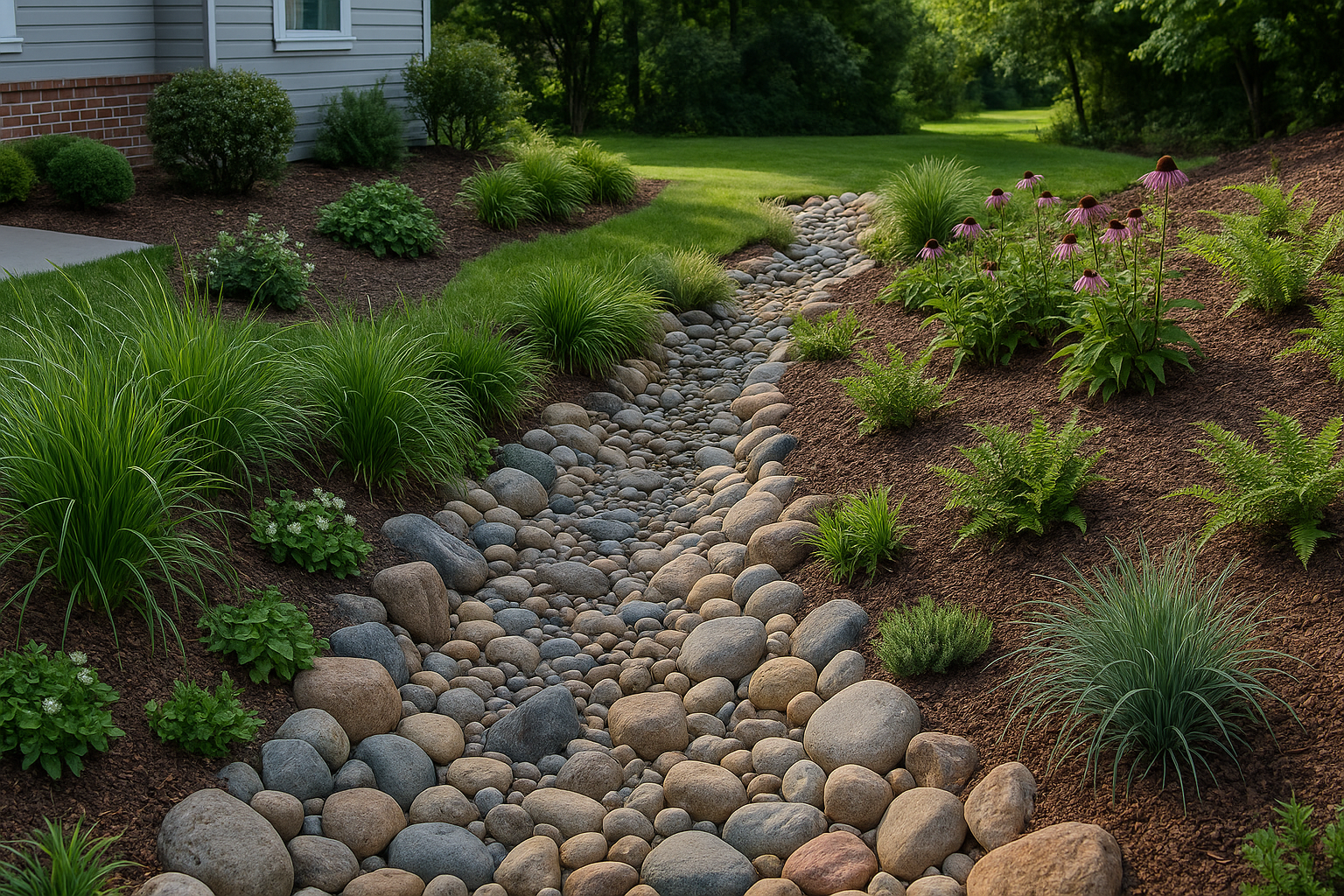
Dry creek beds provide an attractive overflow path for larger storm events. When combined with plantings and permeable mulches, they act as bioswales—capturing sediment and pollutants while conveying water safely.
Planning and Design
Site Assessment
Start by mapping where water enters, flows, and pools on your property. Note down slope, existing drainage outlets, low spots, and nearby structures. Identifying problem areas early helps you prioritize interventions.
Soil Testing and Amendments
Perform a simple percolation test to determine infiltration rates. Many rain gardens require amended soil with increased sand or compost to drain within a day or two. Heavy clay may need more extensive modification or deeper planting beds.
Integrating with Rainwater Harvesting
Combining natural drainage with rain barrels or cisterns lets you capture roof runoff for irrigation. Use overflow to feed a rain garden or swale so excess water is handled naturally.
Plant Selection and Maintenance
Choosing Plants
Opt for native wetland and upland species suited to your local climate and moisture conditions. Include a mix of sedges, wildflowers, shrubs, and trees to provide season-long interest and strong root systems. Avoid invasive species that can undermine the system.
Seasonal and Long-Term Care
Early maintenance includes mulching, weeding, and checking that inlets and outlets stay clear. Once established, natural drainage plantings typically require less water than conventional beds. Inspect after large storms to fix erosion, settle mulch, or adjust grading if needed.
Installation Tips
DIY vs Professional Help
Smaller projects like single rain gardens or permeable paths are doable for experienced DIYers. Larger systems that alter grading or manage heavy flows should involve a landscape designer or civil engineer to ensure safety and compliance with local codes.
Material Choices
Choose durable, permeable materials for paths and edging. Use native mulch and avoid excessive compacting of soils during construction. Proper connection to downspouts and gutters increases effectiveness.
Permits and Regulations
Check local ordinances, especially if you’ll redirect runoff or alter stormwater flows. Some municipalities incentivize green infrastructure with rebates or credits—worth investigating before you start.
Common Mistakes to Avoid
- Placing a rain garden too close to foundations—maintain a safe distance to protect structures.
- Ignoring soil infiltration tests and therefore creating poorly draining basins.
- Using non-native or invasive plants that don’t stabilize soil or require heavy maintenance.
- Failing to plan for overflow during extreme storms—include an emergency spillway.
Conclusion
Natural drainage landscaping is a practical, attractive way to manage water on your property while boosting habitat, soil health, and resilience. Start small with a rain garden or permeable path, learn from how water moves across your land, and scale up over time. With thoughtful planning and the right plants, your yard can become a beautiful, functional part of the local watershed.