
Landscaping with Fountains: Transform Your Outdoor Space with Water Features
Why Add a Fountain to Your Landscape?
Fountains do more than decorate a yard — they introduce movement, sound, and a focal point that elevates the entire outdoor experience. Whether you want to mask street noise, attract birds, or create a soothing retreat, a well-chosen fountain can dramatically improve curb appeal and the feel of your garden.
Types of Fountains for Different Landscapes
Tiered and Classic Garden Fountains
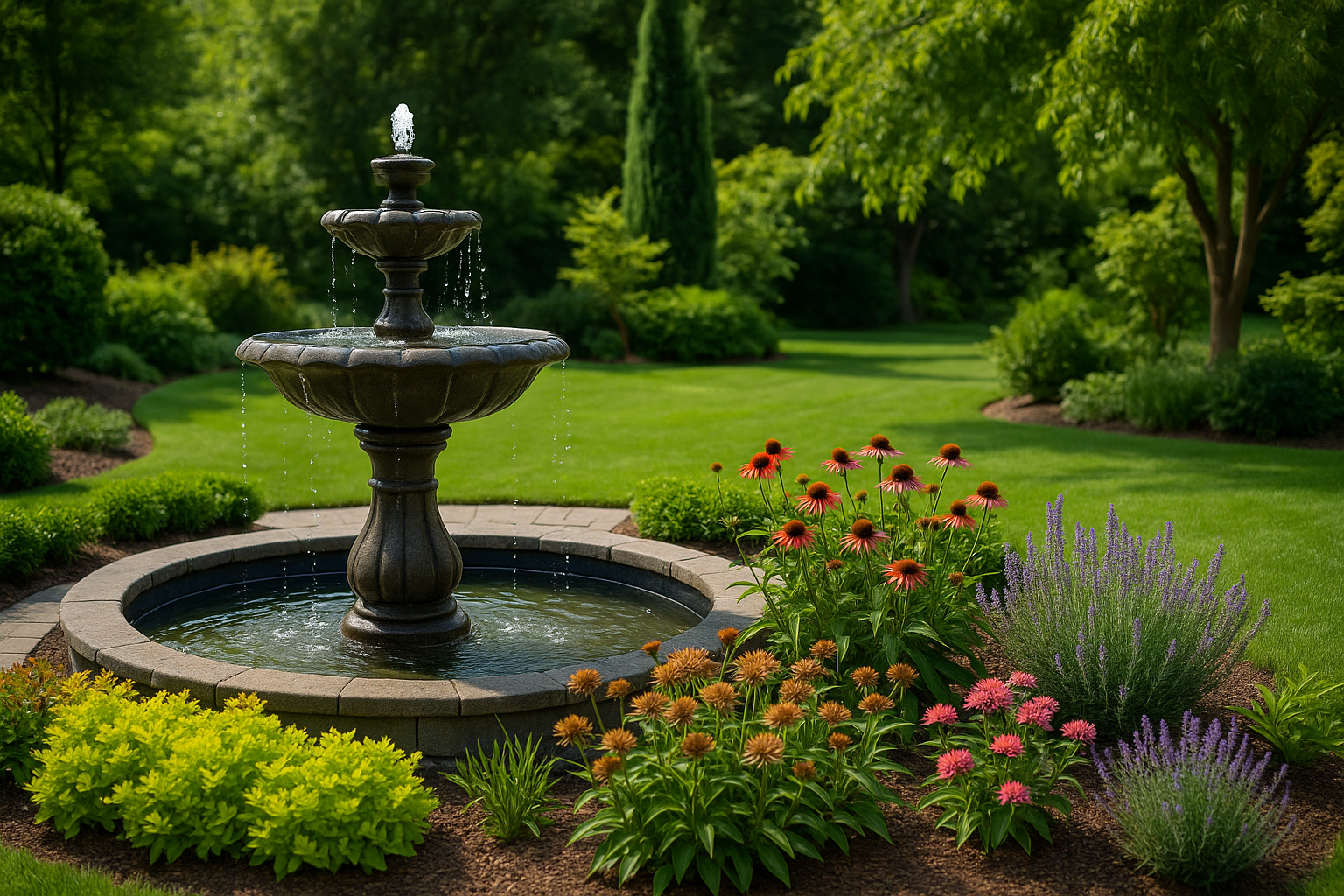
Tiered fountains are timeless and suit traditional or formal gardens. Their cascading bowls create a gentle, rhythmic sound and a striking vertical element for small courtyards or grand entrances.
Bubbling Rocks and Naturalistic Designs
If you prefer a more organic look, bubbling rocks or stone spouts blend seamlessly with plantings and hardscape. These work well in rustic, cottage, or woodland-style gardens and can be integrated into rock gardens or ponds.
Wall Fountains and Space-Saving Options
Wall-mounted fountains are ideal for patios and narrow spaces, offering visual interest without taking up floor space. They’re also great for apartment terraces or formal walled gardens.
Sculptural and Modern Fountains
Contemporary gardens benefit from sleek, sculptural fountains made of corten steel, polished stone, or concrete. These designs emphasize form and texture and pair well with minimal planting schemes.
Pondless Waterfalls and Birdbaths
Pondless waterfalls deliver the sound and movement of flowing water without an exposed water basin, reducing maintenance and safety concerns. Birdbaths are small, simple fountains that attract wildlife while adding charm to garden beds.
Design Principles When Landscaping with Fountains
Scale and Proportion
Match the fountain size to the space. A small fountain can be overwhelmed in a large yard, while an oversized piece can dominate a compact patio. Consider surrounding structures, trees, and furniture when choosing scale.
Placement and Sightlines
Place the fountain where it can be enjoyed from key vantage points: the kitchen window, patio seating, or a garden bench. Avoid placing it too close to large trees that will shed debris into the water.
Sound and Movement
Sound is a critical component of water features. A subtle trickle is calming for intimate spaces, while a louder cascade can mask traffic noise. Test water flow during design to ensure the volume matches the intended ambiance.
Planting Around Fountains
Plant choice should complement the fountain’s style and tolerate moist microclimates. Use a mix of textures and heights to frame the feature without obscuring it:
- Low-growing groundcovers: sedum, ajuga
- Textural perennials: hostas, ferns, heuchera
- Taller accents: ornamental grasses, lavender, small shrubs
- Seasonal color: bulbs and annuals near the basin edge
Practical Considerations
Budget and Maintenance
Fountain costs vary widely. Factor in the initial purchase, plumbing, electrical work, and ongoing maintenance like cleaning pumps, changing water, and winterizing. Pondless systems can reduce maintenance and liability for households with children or pets.
Water Source, Plumbing, and Power
Decide whether the fountain will be connected to a dedicated water line or operate as a closed recirculating system. Ensure safe and discreet electrical access for the pump and any lighting, with GFCI protection and professional installation where required.
Lighting and Safety
Underwater and accent lighting extend enjoyment into the evening and highlight textures. Keep cords and fixtures rated for outdoor use, and place lighting to avoid glare. For safety, use barriers or shallow designs if small children frequent the area.
DIY vs Professional Installation
Smaller fountains and wall-mounted units can be great DIY projects for confident homeowners. Larger ponds, integrated waterfalls, or installations requiring plumbing and electrical work benefit from a landscape contractor or specialist to ensure durability, code compliance, and efficient operation.
Conclusion
Landscaping with fountains brings life, sound, and style to outdoor spaces. With thoughtful selection, proper placement, and routine care, a fountain can be a long-lasting centerpiece that enhances both beauty and serenity in your garden.
Quick maintenance checklist:
- Clean pump and skimmer every 1–3 months
- Remove debris weekly during peak seasons
- Check water level and top off to prevent pump damage
- Winterize or drain if necessary in cold climates