
Landscaping Walkways and Paths: Design Ideas, Materials, and Installation Tips
Why Walkways and Paths Matter in Landscape Design
Landscaping walkways and paths do more than get you from point A to point B—they shape how your yard feels and functions. A well-placed path guides visitors naturally to your front door, invites you to explore a garden, and helps protect lawns and planting beds from foot traffic. Just as important, walkways create structure: they connect outdoor “rooms,” frame focal points, and make the entire space feel intentional.
From a practical standpoint, paths improve safety and accessibility, especially in wet or sloped areas. The right surface can reduce slipping, prevent muddy shortcuts, and keep maintenance easier year-round. Whether you’re planning a simple stepping-stone trail or a full front-entry overhaul, thoughtful pathway design pays off every time you walk outside.
Planning Your Walkway or Garden Path
Before choosing materials, take time to plan the route, scale, and purpose. A beautiful path that’s too narrow, too steep, or placed in the wrong spot quickly becomes frustrating. Start with how you’ll use it, then shape the design around your daily routines.
Define the Purpose and Route
Ask what your path needs to do. Is it a primary front walkway used daily, a side-yard access route for trash bins, or a meandering garden path meant for strolling? Main walkways should be direct and wide enough for two people to walk comfortably side-by-side. Garden paths can be narrower and more relaxed, with curves that reveal plants or features gradually.
To find the best route, watch how people already move through the yard. Those worn “desire lines” in the grass often reveal the most natural path. Mark potential layouts with a garden hose, stakes, or spray paint, then walk it a few times before committing.
Consider Width, Slope, and Drainage
Width matters more than most homeowners expect. As a general guide, aim for about 36–48 inches for a front walkway and 24–36 inches for secondary paths. If you need to roll a cart, move bins, or use mobility aids, go wider and keep turns gentle.
Also plan for water. Poor drainage shortens the life of your walkway and creates slippery spots. Ensure the path has a slight pitch so water sheds to the sides, and avoid directing runoff toward foundations. On slopes, consider steps, landings, or terracing to keep the walking surface stable and comfortable.
Best Materials for Landscaping Walkways and Paths
Choosing the right material is a balance of appearance, budget, maintenance, and climate. The best walkway materials feel solid underfoot, hold up to weather, and fit the style of your home and garden.
Pavers (Concrete or Clay Brick)
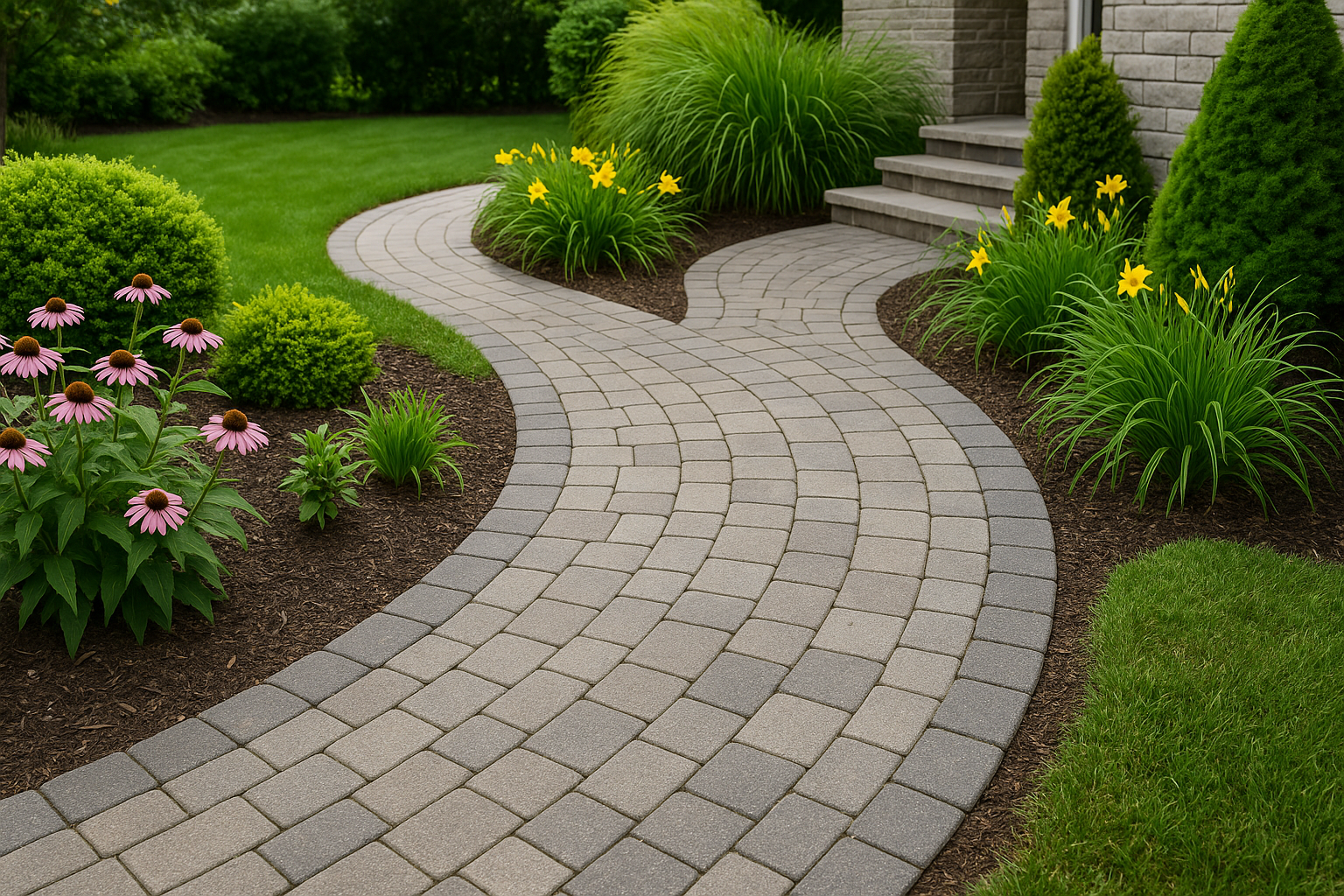
Pavers are a popular choice for landscaping walkways because they look polished and are easy to repair. If one settles or stains, you can replace it without tearing out the entire path. Concrete pavers offer a wide range of shapes and colors, while clay brick pavers bring classic charm and work well with traditional homes.
For long-term performance, pavers need a properly compacted base and edge restraints to prevent shifting. When installed well, they’re durable, attractive, and great for front entries.
Natural Stone (Flagstone, Slate, Limestone)
Natural stone paths add character and a high-end look. Flagstone is especially popular for informal garden paths, patios, and stepper-style walkways. Stone’s natural variation blends beautifully with plants and creates that “settled-in” feel many homeowners want.
Keep in mind that some stone types can be slick when wet, and irregular surfaces may not be ideal for high-traffic routes or anyone who needs a very even walking surface.
Gravel and Decomposed Granite
Gravel and decomposed granite (DG) are budget-friendly options that work well for casual garden paths, side yards, and rustic designs. They drain well and are relatively quick to install. DG, when properly compacted, can create a firmer surface than loose gravel.
Plan for occasional raking, topping off, and weed control. Edging is especially important to keep gravel from migrating into lawns and beds.
Poured Concrete and Stamped Concrete
Poured concrete creates a clean, continuous walkway that’s easy to shovel and simple to maintain. It’s an excellent choice for modern homes or homeowners who want a straightforward, long-lasting solution. Stamped concrete can mimic pavers, slate, or brick patterns while keeping the convenience of a single slab.
Concrete can crack over time, especially with freeze-thaw cycles, so control joints, base preparation, and professional installation details make a big difference.
Mulch, Wood Chips, and Boardwalks
For woodland gardens or low-traffic areas, mulch and wood chips create a soft, natural path that’s easy to refresh. They’re not ideal for wet climates or main routes, but they work wonderfully between garden beds or in play areas.
If you’re dealing with consistently damp ground, a simple boardwalk or raised path can keep feet dry while adding a charming, cottage-style touch.
Design Ideas to Elevate Your Walkways
Once you’ve chosen a route and material, the design details are what make a walkway feel finished. Small upgrades can dramatically improve curb appeal and how welcoming the path feels at night.
Edge Treatments and Borders
Edging creates crisp lines and helps your walkway hold its shape over time. Options include metal edging for a clean modern look, stone borders for a timeless feel, or brick soldier courses that frame pavers neatly. Even a simple trench edge can work for informal paths, as long as it’s maintained.
Curves vs. Straight Lines
Straight walkways feel formal and direct, making them ideal for front entries and contemporary designs. Curved paths feel relaxed and inviting, encouraging a slower pace and highlighting plantings along the way. If you choose curves, keep them purposeful—gentle sweeps usually look more natural than tight, random turns.
Lighting for Safety and Ambiance
Path lighting improves safety and extends the usability of your outdoor space. Low-voltage LED path lights, step lights, and subtle uplighting on nearby trees or walls can define the route without making it look like an airport runway. For an easy upgrade, consider solar lights in low-traffic areas, but rely on wired lighting for consistent performance.
Installation Tips for Long-Lasting Results
Even the most beautiful walkway can fail if the base isn’t right. Good installation is about prep work: excavation depth, compacted base layers, and stable edges.
Base Preparation and Weed Control
For pavers and stone, excavate to the appropriate depth, add a compacted gravel base, and use bedding sand or stone dust depending on the system. Install landscape fabric where it makes sense (especially under gravel) to reduce weed growth and keep layers separated. For gravel paths, a well-defined base and edging prevent ruts and spreading.
Think About Maintenance from Day One
Choose a surface you’ll realistically maintain. Gravel looks great when it’s edged and refreshed; pavers stay sharp with occasional sweeping and joint sand touch-ups; stone may need moss or algae cleaning in shaded, damp spots. If you want low upkeep, prioritize solid surfaces and plan for easy drainage and access for cleaning.
Conclusion: Build a Path You’ll Enjoy Every Day
Landscaping walkways and paths are one of the best ways to improve curb appeal, protect your plantings, and make your outdoor space more enjoyable. Start with a clear plan, pick a material that fits your style and climate, and focus on a strong base and good drainage. With the right design choices—like clean edging, thoughtful curves, and warm lighting—you’ll create a walkway that looks great and feels even better to use.