
Landscaping Walkway Ideas: Practical, Beautiful Paths for Every Yard
Introduction
A well-designed walkway does more than get you from A to B — it sets the tone for your garden, improves curb appeal, and makes outdoor living more enjoyable. Whether you’re creating a subtle path to your front door or a meandering garden trail, this guide covers landscaping walkway ideas that balance style, function, and budget.
Design Principles for Successful Walkways
Flow and Function
Start by watching how people naturally move through the space. A walkway should follow the most used route rather than forcing people to take awkward steps. Consider direct lines for utility paths and gentle curves for leisure garden walks.
Scale and Proportion
Match the width of the walkway to its purpose: 3–4 feet for a single-person garden path, 4–6 feet for a comfortable front-entry walk where two people might pass. Keep proportions consistent with the home and landscape features so the path feels integrated.
Materials and Texture
Texture affects both safety and aesthetic. Smooth surfaces are easier to walk on and shovel in winter; textured materials add visual interest and grip. Mix materials sparingly to avoid a cluttered look.
Material Options and How to Use Them
Natural Stone
Flagstone, bluestone, and slate create a timeless, premium look. Irregular shapes lend a rustic vibe, while cut stone gives a more formal appearance. Natural stone is durable but often pricier and typically requires a stable base to prevent shifting.
Pavers
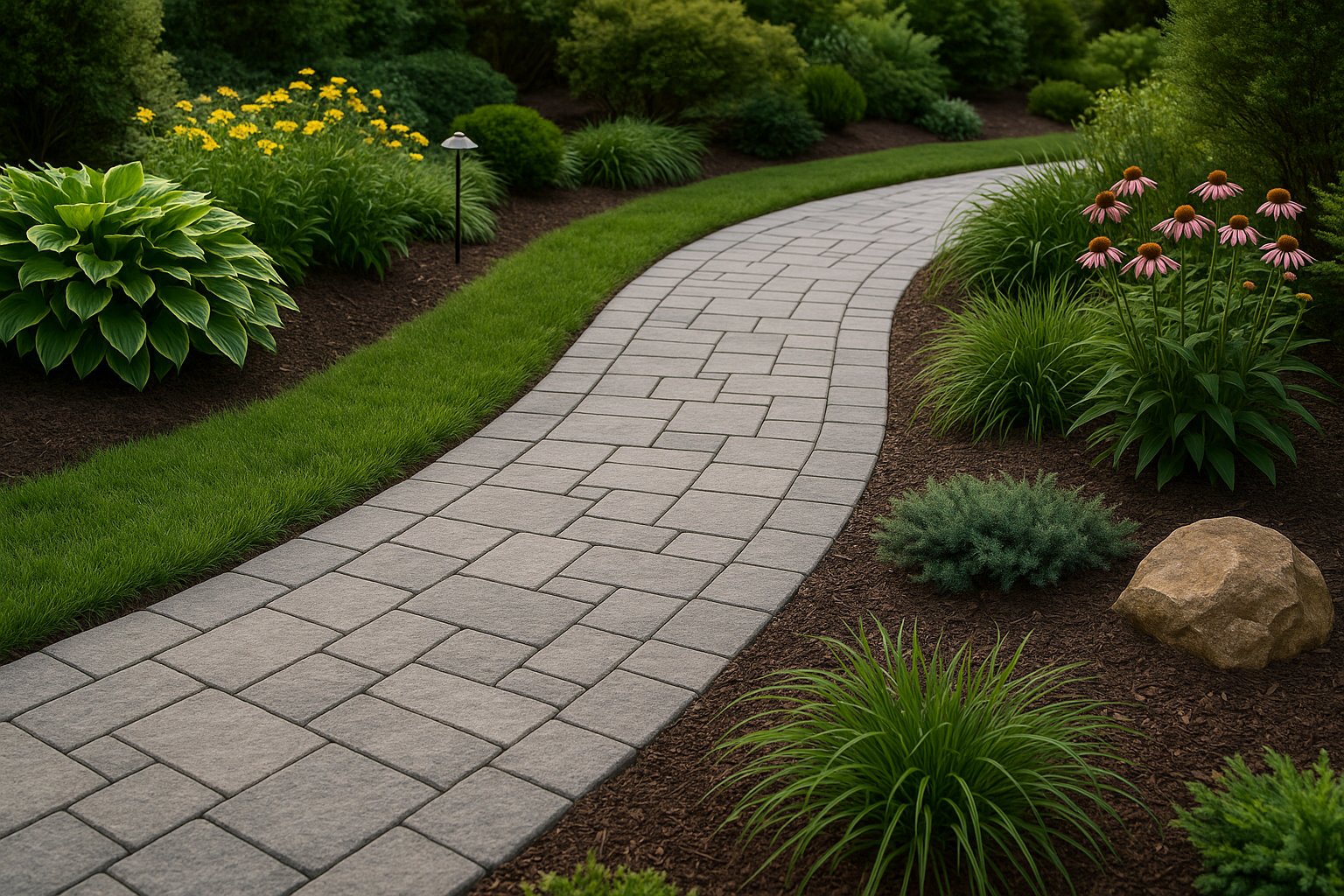
Concrete or clay pavers offer flexibility in pattern and color. They’re easy to replace and allow for precise edges. Consider permeable pavers to help manage runoff and reduce puddling.
Gravel and Decomposed Granite
Budget-friendly and easy to install, gravel and decomposed granite are great for casual paths. Use edging to keep material contained and a compacted base to reduce migration. Add stabilizing grids for a firmer walking surface.
Stepping Stones and Mulch
Stepping stones set in grass or mulch suit informal garden paths. They minimize material use and create a light, playful look. Ensure stones are level and spaced for comfortable strides.
Poured Concrete
Concrete is practical and versatile. Stamped or stained finishes can mimic wood, stone, and tile. Sloped or textured finishes improve traction; control joints help prevent unsightly cracks.
Style Ideas to Match Your Home
Rustic Cottage Path
Combine irregular flagstone with low plantings—thyme, sedum, or dwarf lavender—for a soft, lived-in feel. Use warm colors and natural edging like stacked stone or compacted soil.
Modern Minimalist Walkway
Think linear pavers, clean edges, and restrained plantings. Use large-format concrete slabs or rectangular pavers spaced with gravel or low groundcover for a sleek, contemporary look.
Formal Garden Approach
Symmetry and repetition work well for formal homes. Use straight lines, trimmed hedges, and consistent materials such as cut stone or brick. Add urns, lighting, or a focal statue to enhance the architectural feel.
Natural Woodland Trail
For larger properties, a mulched or gravel trail with rustic timber steps fits wooded landscapes. Native ferns, moss, and shade-loving plants make the path feel like part of the environment.
Lighting, Safety, and Drainage
Lighting Options
- Low-voltage path lights for soft, consistent illumination.
- Solar fixtures for easy installation and energy savings.
- Step lights or recessed fixtures for stairs and grade changes.
Position lights to avoid glare and ensure even coverage along the route.
Grading and Drainage
Proper drainage prevents standing water and material erosion. Slant walkways slightly away from foundations, add a gravel base under porous surfaces, and include drains where water concentrates.
Maintenance and Budget Tips
Low-Maintenance Strategies
- Choose materials that withstand local freeze-thaw cycles.
- Install weed barriers under gravel or stepping-stone paths.
- Use durable edging to keep materials in place.
Budget-Friendly Upgrades
Mix higher-cost focal materials (like stone near the entry) with economical options (gravel or mulch) in less visible areas. Phasing the project over seasons can spread costs while still improving functionality early on.
Conclusion
A thoughtful walkway enhances usability and beauty in your yard. By choosing the right materials, considering flow and scale, and planning for lighting and drainage, you can create a path that complements your landscape and fits your budget. Start small, prioritize safety and function, and let your style guide the finishing touches.