
Landscape Lighting Ideas: 12 Ways to Make Your Yard Safer, Warmer, and More Beautiful at Night
Why landscape lighting matters
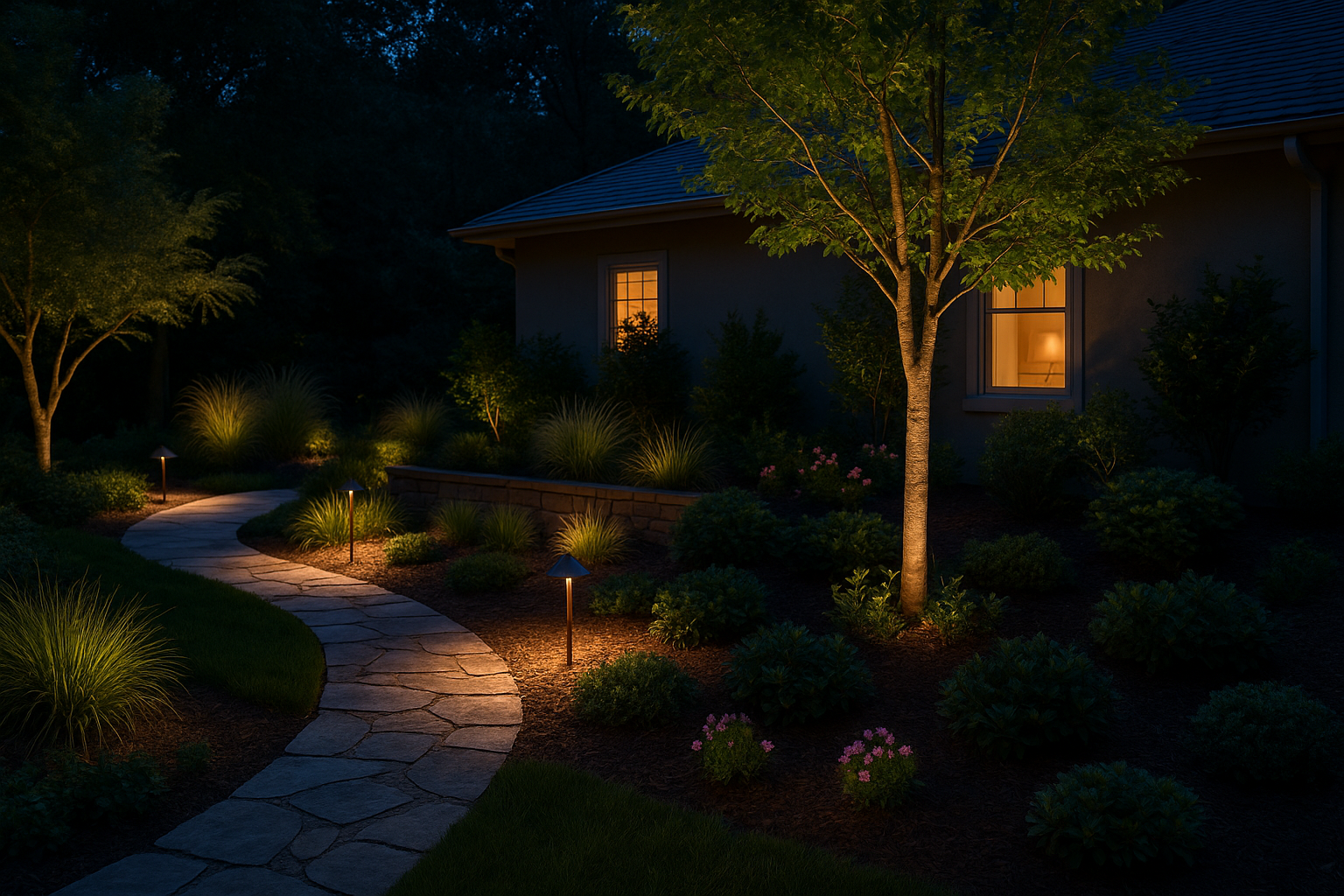
Landscape lighting does more than make your home look great after sunset. The right setup improves safety on steps and walkways, adds a welcoming glow for guests, and highlights the features you’ve already invested in—like mature trees, stonework, or a backyard patio. It can also extend the hours you actually use your outdoor spaces, turning a dark yard into an evening hangout spot.
Whether you’re starting small with a few path lights or planning a full design, the best landscape lighting ideas follow the same principle: light what you use, accent what you love, and keep glare to a minimum.
1) Start with a simple lighting plan
Before you buy fixtures, walk your property at night with a flashlight and note the darkest areas, tripping hazards, and any focal points you’d like to showcase. A quick plan helps you avoid the most common mistake: adding too many lights in the wrong places.
Think in layers: ambient, task, and accent
Professional-looking landscape lighting usually includes three layers:
- Ambient lighting creates a soft overall glow (often from downlights or gentle wall washes).
- Task lighting improves visibility where you walk, cook, or work (paths, steps, grills).
- Accent lighting highlights a feature (trees, statues, textured walls, water elements).
Choose warm color temperatures
For most homes, warm white light (around 2700K–3000K) feels inviting and flattering. It also blends nicely with indoor lighting seen through windows. Cooler temperatures can work for modern designs, but they’re easier to overdo and may feel harsh in a garden setting.
2) Pathway lighting ideas that look polished (not like an airport runway)
Path lighting is the foundation of many landscape lighting designs, but it’s also where people tend to over-light. The goal is safe navigation, not bright pools of light every few feet.
Stagger lights and keep spacing consistent
Instead of placing fixtures directly opposite each other, stagger them along the path. This creates a natural rhythm and avoids that “runway” look. As a general guideline, start with spacing around 6–10 feet, then adjust based on brightness and beam spread.
Use shielded fixtures to reduce glare
Look for path lights with a hood or glare shield so the light aims downward. It’s more comfortable for guests and keeps the focus on the landscape rather than the bulb.
3) Step and stair lighting for safer entryways
Steps are one of the most important areas to illuminate. A subtle, well-placed light can prevent trips without making the entrance feel overly bright.
Recessed step lights for a clean look
Recessed fixtures installed in risers or sidewalls provide a sleek, built-in feel. They’re especially popular for front porches and modern hardscapes.
Under-cap lights on retaining walls
If you have stone or concrete walls, under-cap lights cast a soft wash down the face of the wall and onto nearby treads. The result is elegant and practical, with minimal visible hardware.
4) Highlight trees and shrubs with uplighting
Uplighting is one of the fastest ways to add drama and depth to a yard. It draws the eye upward and gives your landscape dimension at night.
Use the “grazing” technique on textured trunks
Place a fixture close to the base of a tree and aim it up the trunk. This accentuates texture and creates beautiful shadow play in branching canopies—especially on oaks, maples, and palms.
Try cross-lighting for fuller coverage
For larger trees, use two fixtures from different angles rather than one very bright light. Cross-lighting reduces harsh shadows and makes the tree look balanced from multiple viewing points.
5) Add downlighting for a soft “moonlight” effect
Downlighting is a favorite among designers because it feels natural. Mounted high in a tree or on an eave, it casts gentle light downward like moonlight.
Position lights to avoid harsh hotspots
Use wider beam spreads and aim toward planting beds, patios, or lawn edges. When possible, let foliage partially filter the light for a dappled, organic look.
Great spots for downlights
- Over seating areas and patios
- Along driveways from mature trees
- Near garden beds where uplights might cause glare
6) Create outdoor living “rooms” with patio and deck lighting
If you entertain outdoors, lighting can make the space feel like a true extension of your home.
Layer string lights with subtle task lighting
String lights add warmth and ambience, but they’re best paired with focused task lighting—like a small downlight over a grill or low-level lighting around steps—so the space is both cozy and functional.
Use deck post lights or rail lighting for definition
Low-level lighting along railings or posts outlines the deck perimeter and improves safety without flooding the area with brightness.
7) Accent walls, fences, and stonework with grazing or washing
Hardscape features deserve attention too. Lighting a stone wall, brick facade, or wood fence can add instant sophistication and make the yard feel larger.
Wall washing for a smooth glow
Place fixtures a bit away from the surface to create an even “wash” of light. This works well on flat walls, privacy fences, and garage exteriors.
Grazing for texture and drama
Put lights close to the surface to highlight texture and create shadows. Grazing looks especially striking on stacked stone and rough brick.
8) Water feature lighting that feels calm and intentional
Water features can become nighttime showpieces with the right lighting—just keep it subtle so it stays relaxing.
Use submersible lights sparingly
One or two underwater lights can bring a fountain or pond to life. Too many can look overly bright and distract from the natural movement of water.
Backlight for sparkle
Position a light behind a waterfall or spillway to catch droplets and create a soft shimmer. This approach is often more elegant than shining light straight into the water.
9) Driveway and front yard lighting for curb appeal
Front yard lighting sets the tone for your home and helps guests feel confident approaching at night.
Frame the entry without overpowering it
Use a mix of path lights, subtle uplights on architectural plants, and a warm porch fixture. The goal is to create a clear visual path to the door while keeping the lighting comfortable.
Consider bollards for modern driveways
Bollard lights can look clean and contemporary along long driveways or wide front walks. Choose shielded styles to reduce glare.
10) Practical tips: power options, controls, and efficiency
Good landscape lighting should be easy to live with. A few smart choices up front can save time and energy long-term.
Low-voltage LED is the go-to
Low-voltage LED systems are energy-efficient, long-lasting, and flexible for future changes. They’re also generally safer and easier to expand than line-voltage options.
Add timers, photocells, or smart controls
- Photocells turn lights on at dusk automatically.
- Timers shut lights off late at night to save energy.
- Smart transformers let you control zones and schedules from an app.
Avoid the most common lighting mistakes
- Over-lighting every feature (less is usually more)
- Exposed bulbs that cause glare
- Mixing color temperatures across fixtures
- Forgetting maintenance access for trimming and cleaning
Conclusion
The best landscape lighting ideas combine safety, comfort, and a little bit of drama. Start with pathways and steps, then add accents like uplighting for trees or a soft moonlight effect over a patio. With warm LEDs, glare-controlled fixtures, and simple automation, you can create a yard that feels welcoming and looks incredible—long after the sun goes down.