
Landscape Irrigation Design: Practical Guide to Efficient, Healthy Landscapes
Introduction
Thoughtful landscape irrigation design is the difference between a thriving garden and wasted water. Whether you’re planning a new yard or upgrading an older system, a good design balances plant needs, soil conditions, and local climate to deliver water where and when it’s needed most. This guide walks through the principles, system choices, installation tips, and maintenance practices that produce efficient, healthy landscapes.
Principles of Good Irrigation Design
At its core, irrigation design aims to provide uniform water coverage that matches plant demand while minimizing waste. Key principles include:
- Hydrozoning: group plants by water needs so each zone receives the appropriate schedule.
- Match precipitation rates to soil absorption to avoid runoff and puddling.
- Prioritize deep, infrequent watering to encourage strong root systems.
- Design for accessibility: valves, filters, and controllers should be reachable for service.
Assessing Site Conditions
Soil Type and Infiltration
Sandy soils drain quickly and need more frequent irrigation; clay holds water longer but absorbs slowly. Perform a simple percolation test: dig a 12-inch hole, fill with water, and measure how fast it drains. This informs run times and cycle scheduling.
Topography and Microclimates
Slopes, shadows, and wind exposure change how plants dry out. South- and west-facing slopes often need more water. Use contouring, terracing, or emitter placement to control runoff on inclines.
Plant Material
Identify plant palettes and their mature water needs. Native and drought-tolerant plants usually require less frequent irrigation. Lawn areas often demand the most water; consider reducing turf or substituting with lower-water alternatives.
Choosing the Right System
Drip Irrigation
Drip systems deliver water slowly at the root zone and are ideal for beds, trees, and shrubs. They reduce evaporation and can be easily zoned by plant type. Use pressure-compensating emitters on slopes and mixed plantings.
Sprinkler Systems
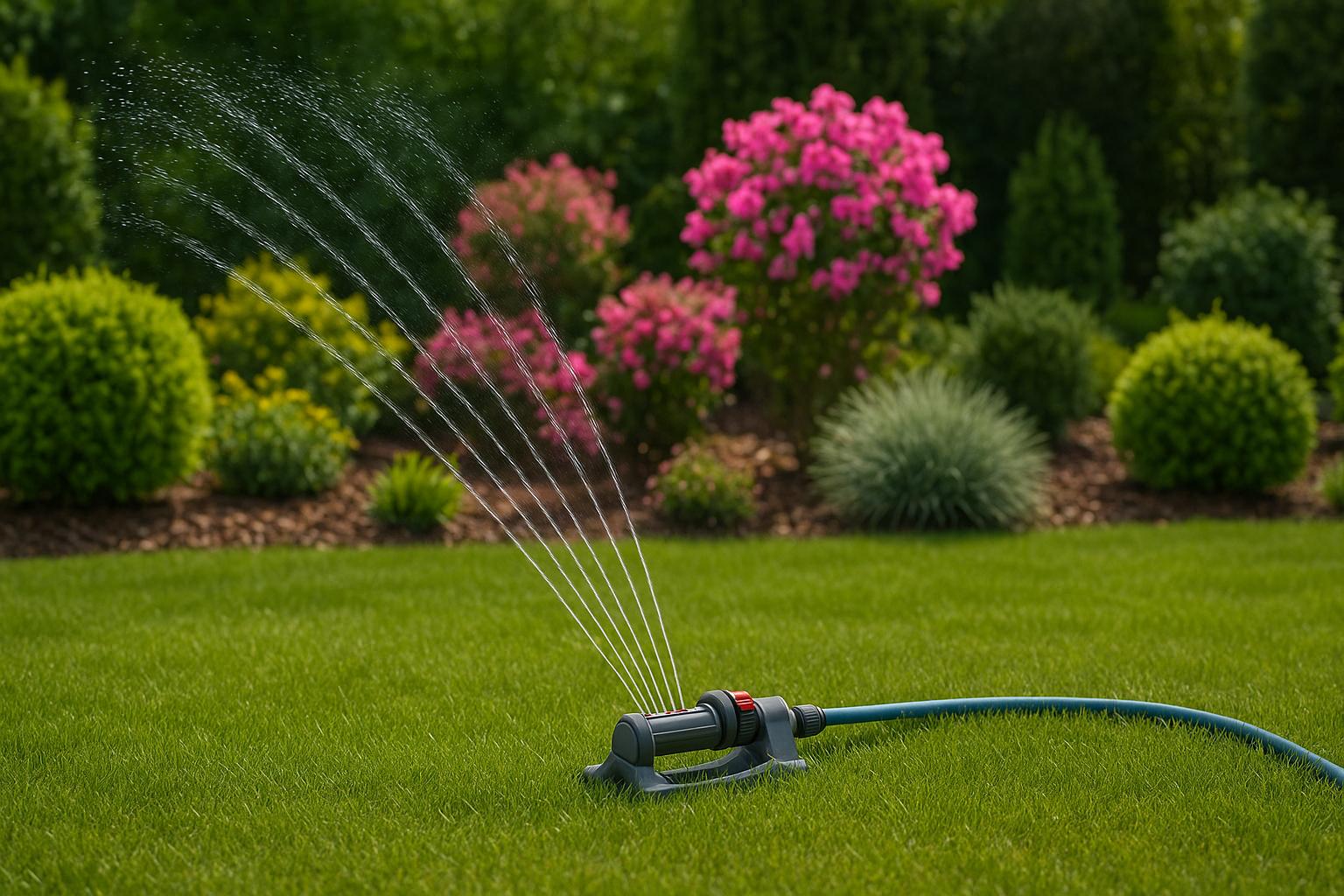
Sprinklers are effective for turf and larger, uniform areas. Choose matched precipitation rate (MPR) heads and design overlapping patterns to ensure even coverage. Rotor heads work well for large lawns; spray heads suit smaller areas.
Hybrid Systems and Smart Controllers
Many landscapes benefit from a hybrid approach—sprinklers for turf, drip for beds. Smart controllers that use weather data or soil moisture sensors can reduce watering by adjusting schedules automatically, improving efficiency without extra effort.
Water Efficiency Strategies
- Use mulch to retain soil moisture and reduce evaporation.
- Install flow sensors and master valves to detect leaks or breaks quickly.
- Group plants with similar needs into the same irrigation zone (hydrozoning).
- Apply the cycle-and-soak method: run shorter cycles multiple times to allow water to infiltrate on slopes or clay soils.
- Consider captured rainwater or recycled graywater where local codes allow.
Installation Best Practices
Proper installation sets the stage for years of reliable performance. Follow these tips:
- Map your layout before digging. Mark utility lines and plan valve locations for accessibility.
- Use quality filters and pressure regulators to protect drip lines and emitters.
- Slope compensation devices or emitter spacing adjustments help avoid overwatering downhill areas.
- Label controllers and wiring for easier troubleshooting later.
Maintenance and Seasonal Adjustments
Routine checks keep systems efficient and extend equipment life. Monthly and seasonal tasks include:
- Inspect nozzles and emitters for clogs; clean or replace as needed.
- Check for leaks, broken heads, and misaligned sprinklers after storms or mowing.
- Adjust schedules seasonally: reduce frequency in cooler months and increase during heat waves.
- Winterize systems in freezing climates by blowing out lines or draining them to prevent damage.
Common Mistakes to Avoid
- Overwatering due to fixed schedules instead of adjusting for weather.
- Mixing plant types with different water needs in one zone.
- Poorly placed sprinkler heads that spray hardscapes or sidewalks, wasting water.
- Neglecting regular maintenance, leading to inefficiencies and higher costs.
Cost Considerations and Return on Investment
Initial costs vary widely depending on system complexity, but thoughtful design often pays back through reduced water bills and healthier plantings. Smart controllers, efficient emitters, and proper zoning reduce operating costs and can increase property value by enhancing curb appeal.
Conclusion
Landscape irrigation design blends science and practical judgment. Start by understanding your site and plant needs, choose systems that match those needs, and commit to simple maintenance and seasonal adjustments. A well-designed irrigation system saves water, lowers costs, and keeps your landscape looking its best year-round.