
Landscape Drainage Solutions: How to Fix Yard Flooding and Protect Your Property
Why Landscape Drainage Matters
Standing water in the yard is more than an eyesore—it can quietly damage your home and landscape. Poor drainage can lead to soggy lawns, dying plants, mosquito problems, soil erosion, and even foundation issues when water consistently pools near the house. The good news: there are reliable landscape drainage solutions for nearly every property, from simple grading tweaks to installed systems that move water safely away.
In this guide, you’ll learn what causes drainage problems, how to spot them early, and which solutions work best for different yard conditions.
Common Signs of Drainage Problems
Drainage issues often build over time, so it helps to recognize early warnings. If you notice one or more of these, it’s worth investigating:
- Persistent puddles that stick around for more than 24–48 hours after rain
- Water collecting near the foundation or seeping into a basement/crawl space
- Soil erosion, exposed roots, or washed-out mulch
- Mushy turf and thinning grass in low spots
- Algae or moss growth where the ground stays wet
- Cracked walkways or sinking pavers caused by soil shifting under saturated conditions
What Causes Poor Yard Drainage?
Most landscape drainage problems come down to a few root causes. Understanding them makes it easier to choose the right fix.
- Improper grading: If the yard slopes toward the home—or is mostly flat—water has nowhere to go.
- Compacted soil: Heavy clay or compacted ground absorbs water slowly, leading to runoff and pooling.
- Downspout discharge: Roof runoff that dumps too close to the house can overwhelm the soil.
- Hardscapes and construction changes: Patios, driveways, and additions can redirect water into problem areas.
- High water table or poor subsoil: In some areas, groundwater naturally sits close to the surface.
Landscape Drainage Solutions (Best Options by Situation)
The best landscape drainage solution depends on where the water is coming from and where it needs to go. Here are proven options homeowners use to fix yard drainage for good.
1. Regrading and Sloping
If water flows toward your home or collects in dips, regrading is often the most effective long-term fix. The goal is to create a gentle slope that directs water away from structures and into a safe drainage area.
- Best for: Water near the foundation, widespread puddling, low spots
- What it involves: Adding or moving soil to establish proper pitch
- Tip: Pair regrading with extended downspouts so roof runoff doesn’t undo the work.
2. Downspout Extensions and Rainwater Routing
Sometimes the biggest drainage “problem” is simply where your downspouts empty. A quick improvement is extending downspouts 6–10 feet away from the foundation or connecting them to a buried drain line that discharges to a safe area.
- Best for: Wet foundation beds, basement moisture, corner pooling
- What it involves: Above-ground extenders, pop-up emitters, or solid pipe runs
- Watch out: Don’t send water toward a neighbor’s property or onto sidewalks where it can freeze.
3. French Drains
A French drain is one of the most popular yard drainage systems because it captures water below the surface and moves it away efficiently. It typically includes a gravel-filled trench with a perforated pipe wrapped in filter fabric to reduce clogging.
- Best for: Soggy lawns, water moving through soil toward a low area, persistent wet zones
- Pros: Hidden once installed; effective for chronic saturation
- Considerations: Needs an appropriate outlet (daylight discharge, dry well, or approved connection).
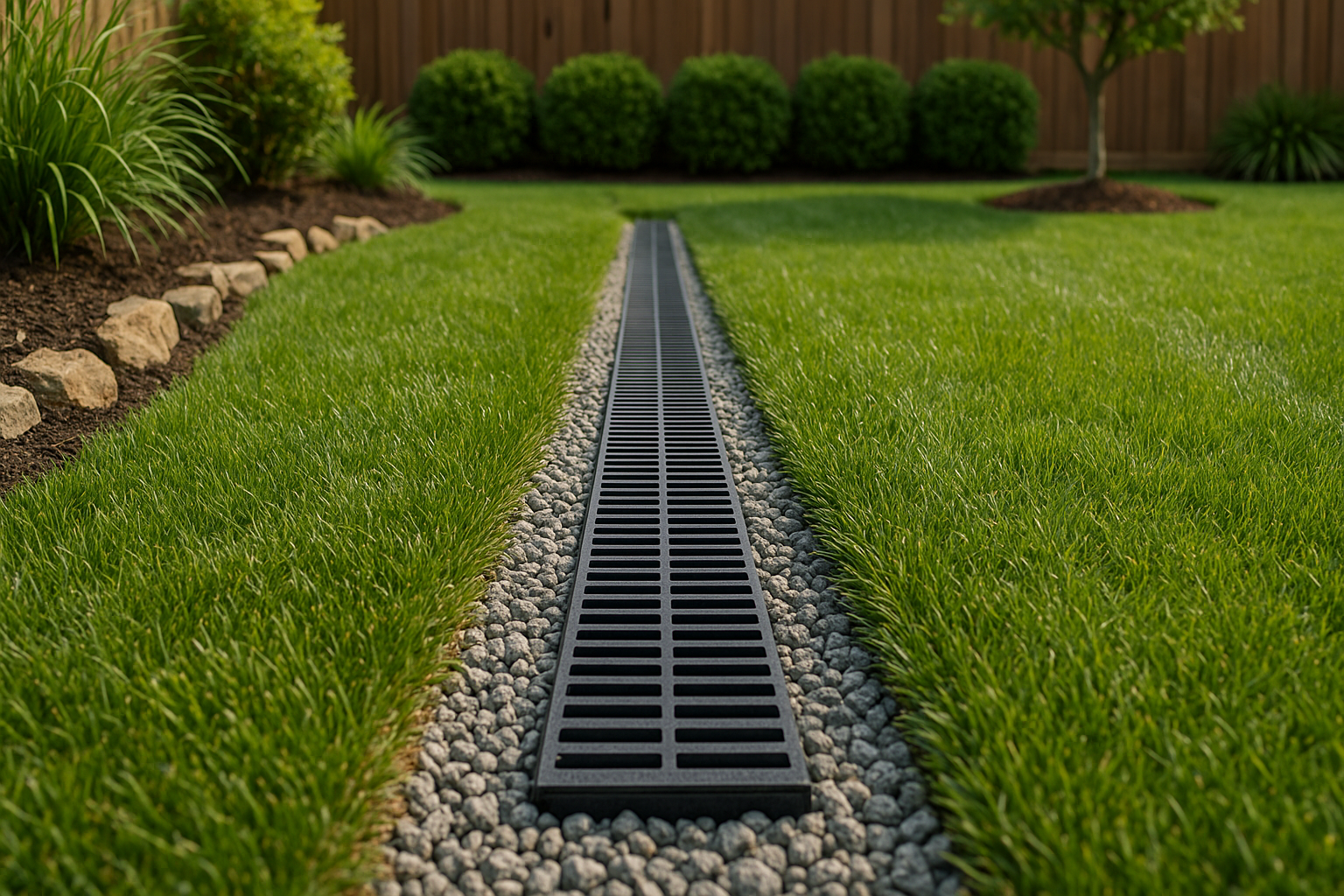
4. Surface Drains and Catch Basins
When water pools on the surface—especially in a low spot—surface drains (often paired with catch basins) can quickly intercept runoff. These systems connect to underground piping that transports water to a discharge point.
- Best for: Low spots, driveway runoff, patio pooling, downspout tie-ins
- Pros: Fast relief for visible puddling; great for managing heavy rains
- Maintenance: Clear debris from grates and basins to keep flow strong.
5. Dry Wells
A dry well is an underground structure that temporarily stores water and allows it to slowly soak into surrounding soil. It’s a great option when you can’t “daylight” a drain to a lower area.
- Best for: Roof runoff, limited outlets, moderate rainfall areas
- Pros: Hidden; reduces surface flow and erosion
- Important: Works best in soils that can infiltrate—very clay-heavy soils may require a larger system or alternative.
6. Swales and Berms (Natural Drainage)
Swales are shallow, gently sloped channels that guide water across the landscape. Berms are raised mounds that block or redirect flow. Together, they’re a natural-looking way to manage runoff—especially in larger yards.
- Best for: Managing runoff across open areas, reducing erosion on slopes
- Pros: Can blend seamlessly into landscaping; supports healthy plantings
- Design tip: Add stones or deep-rooted grasses to stabilize swales in higher-flow areas.
7. Rain Gardens and Plant-Based Solutions
If you want a drainage solution that also boosts curb appeal, a rain garden can be a smart move. These landscaped depressions use water-tolerant plants and improved soil to capture and absorb stormwater.
- Best for: Managing runoff from roofs, driveways, and patios
- Pros: Eco-friendly; supports pollinators; reduces runoff volume
- Planting note: Choose native plants suited to occasional wet feet and seasonal changes.
8. Permeable Pavers and Porous Hardscapes
Traditional concrete and asphalt shed water quickly, which can overwhelm parts of your yard. Permeable pavers, porous concrete, and gravel systems allow water to pass through into a prepared base, reducing runoff and puddling.
- Best for: Driveways, walkways, patios with runoff issues
- Pros: Reduces surface water; helps prevent ice buildup in some climates
- Maintenance: Periodic vacuuming or sweeping keeps joints from clogging with fine sediment.
How to Choose the Right Drainage Fix
Before installing anything, take time to observe your yard during a heavy rain. Note where water collects, how it moves, and where it could safely exit. These quick checkpoints help narrow the best solution:
- Problem is near the house? Start with grading and downspout routing.
- Puddles in one low spot? Consider a surface drain or catch basin.
- Yard stays spongy for days? A French drain or soil improvement may be needed.
- No obvious outlet? Look into a dry well or rain garden.
- Runoff rushes downhill? Swales, berms, and erosion control are often best.
If you’re unsure, a local drainage contractor or landscape professional can assess grade, soil type, and discharge options—especially important where permits or stormwater rules apply.
Installation and Maintenance Tips
- Keep drain outlets clear: Make sure pop-up emitters and discharge points aren’t buried by mulch or blocked by leaves.
- Use filter fabric wisely: In French drains and gravel trenches, quality fabric helps reduce sediment buildup.
- Don’t ignore gutters: Clogged gutters can cause overflow that mimics yard drainage problems.
- Plan for big storms: Design systems for heavy rainfall, not just average showers.
- Protect slopes: Use rock, matting, or dense planting to prevent washouts where water speeds up.
Conclusion
Landscape drainage solutions don’t have to be complicated, but they do need to match your yard’s layout, soil, and water patterns. Whether you’re extending downspouts, installing a French drain, building a rain garden, or regrading around the foundation, the right approach will protect your home, improve your lawn’s health, and make your outdoor space more enjoyable after every storm.
If you’re dealing with recurring flooding or water near the foundation, it’s worth acting sooner rather than later—small drainage problems have a way of becoming expensive ones.