
Front Yard Landscaping Ideas: A Practical Guide to Boost Curb Appeal
Why Front Yard Landscaping Matters
Your front yard is the first impression your home makes—on guests, neighbors, and potential buyers. Thoughtful front yard landscaping can boost curb appeal, create a welcoming entry, and even reduce maintenance headaches when it’s planned well. Beyond looks, the right layout can improve drainage, provide shade, and support local pollinators with the right plant choices.
Whether you’re starting from scratch or refreshing what you already have, the goal is the same: a front yard that feels intentional, fits your home’s style, and is easy to keep looking good.
Planning Your Front Yard Landscape
Assess sun, soil, and drainage
Before you buy a single plant, spend a few days observing your yard. Note where the sun hits in the morning and afternoon, which spots stay damp after rain, and where water runs off. A quick soil test (many garden centers offer inexpensive kits) can tell you if your soil is sandy, clay-heavy, or somewhere in between—plus whether your pH needs adjusting.
Good drainage is especially important in the front yard because soggy beds can lead to unhealthy plants and muddy walkways. If puddles linger, consider regrading, adding a rain garden, or choosing plants that tolerate wetter conditions.
Set goals: curb appeal, privacy, low maintenance
Start with what you want most. Are you trying to make the entry feel more inviting? Do you want privacy from the street? Or are you aiming for a clean, low-maintenance look that doesn’t require constant trimming?
- Curb appeal: Emphasize the walkway, entry plantings, and balanced shapes.
- Privacy: Use layered shrubs, ornamental grasses, or a small tree to soften sightlines.
- Low maintenance: Prioritize hardy perennials, mulch, and fewer high-pruning hedges.
Create a simple design (paths, beds, focal points)
A simple plan beats an expensive impulse buy every time. Sketch your front yard (even a rough drawing works) and identify three key elements:
- Paths: Make them wide enough for two people to walk comfortably, and keep the route clear and well-lit.
- Beds: Define planting areas with gentle curves or clean lines that complement your home.
- Focal points: A statement tree, a pair of matching pots, or a standout shrub near the entry adds structure.
A good rule of thumb: keep the design readable from the street. Too many tiny features can look busy, while a few bold shapes feel polished and intentional.
Front Yard Landscaping Ideas That Work
Foundation planting basics
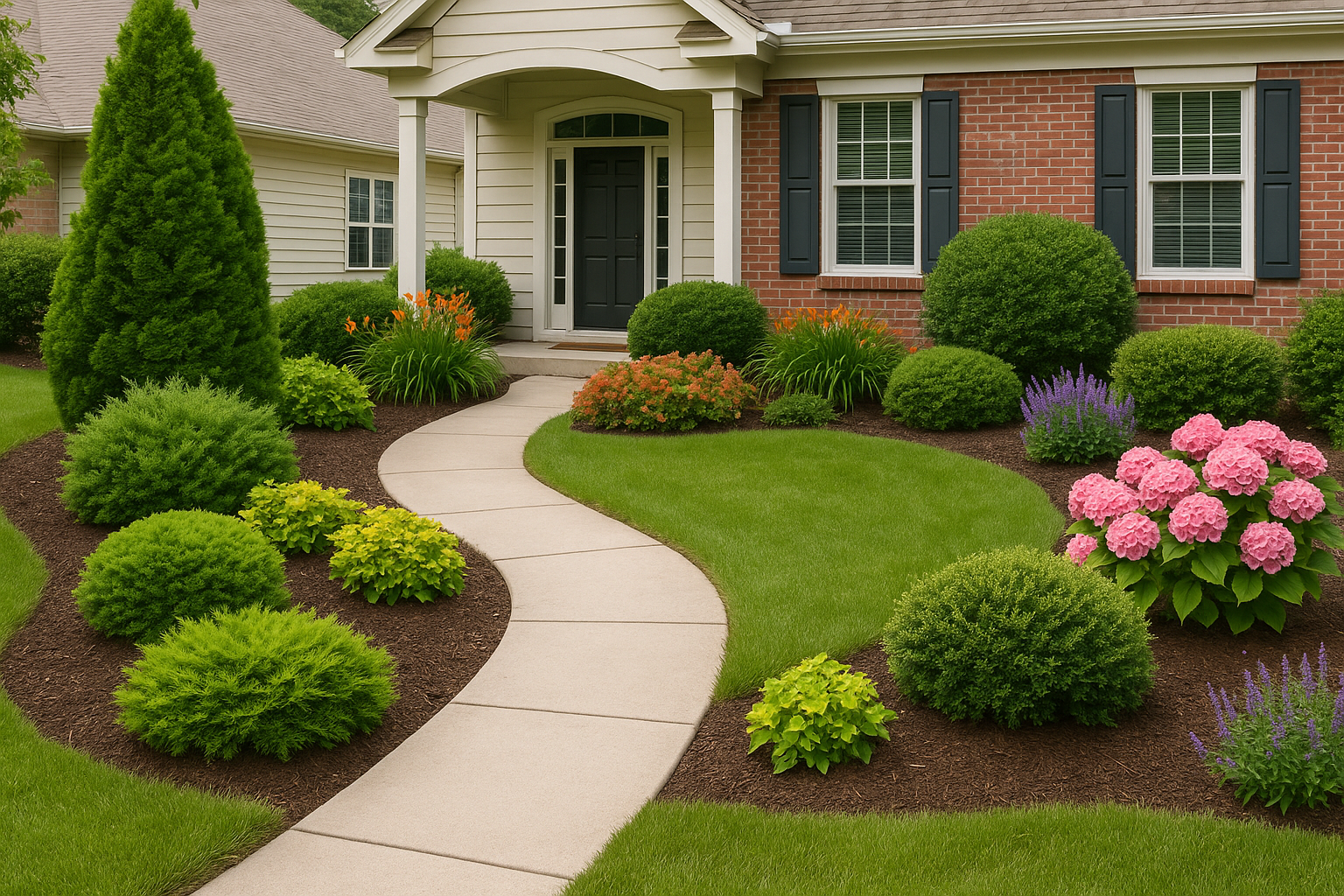
Foundation plantings help your home “sit” naturally in the landscape instead of looking like it was dropped onto the lawn. Choose a mix of evergreens (for year-round structure) and flowering shrubs or perennials (for seasonal color). Leave breathing room between plants and the house—crowded shrubs can trap moisture and create maintenance problems later.
For a tidy look, repeat a few plant varieties rather than using one of everything. Repetition is one of the easiest ways to make a front yard landscape look cohesive.
Walkway and entryway upgrades
Your walkway is a natural spotlight. Edge it with low plants that won’t spill into the path, and consider adding solar or low-voltage lighting for safety. Near the front door, symmetrical features—like matching planters or two upright shrubs—create a welcoming, classic feel.
If you want an instant refresh, update the entry with:
- Fresh mulch and clean bed edges
- A new doormat and well-placed planters
- Seasonal flowers in containers (easy to swap)
Low-maintenance landscaping options
If you’d rather enjoy your yard than work in it every weekend, build your plan around durability. Use mulch or decorative stone to reduce weeds, choose perennials that don’t need staking, and limit fussy plants that require frequent pruning.
Smart low-maintenance front yard landscaping ideas include:
- Drought-tolerant beds: Great for sunny areas and water-conscious homeowners.
- Groundcovers: Options like creeping thyme or sedum can fill gaps and suppress weeds.
- Defined borders: Steel edging, brick, or stone makes beds look crisp and keeps mulch in place.
Using trees and shrubs for structure
Trees and shrubs are the “bones” of the landscape. A small ornamental tree (like a dogwood, redbud, or Japanese maple—depending on your climate) can anchor the yard and provide shade. Shrubs add volume and help connect the home to the garden.
Think in layers: taller plants in back, medium shrubs in the middle, and lower perennials or edging plants in front. This creates depth, looks natural, and keeps your home from disappearing behind overgrown greenery.
Color, texture, and seasonal interest
A front yard looks best when there’s something interesting in every season. You can achieve that without constant replanting by mixing:
- Spring: Bulbs like tulips and daffodils for early color
- Summer: Long-blooming perennials like coneflower or salvia
- Fall: Ornamental grasses and shrubs with bold foliage color
- Winter: Evergreens, berries, and plants with interesting bark
Texture matters as much as цвет: pair fine-leaved grasses with broad-leaf shrubs, or mix glossy evergreen foliage with softer perennials to add contrast.
Budget-Friendly Front Yard Landscaping Tips
Prioritize the biggest visual wins
If you’re working with a budget, focus on improvements that make the largest impact from the street. Clean lines, defined beds, and a tidy entry often outperform expensive plants that don’t fit the space.
High-impact, budget-friendly upgrades include:
- Refreshing mulch and sharpening bed edges
- Adding one focal-point shrub or small tree
- Installing simple path lighting
Choose plants that spread and return every year
Perennials, ornamental grasses, and hardy shrubs give you more value over time because they return each season and often grow larger. Start with smaller plants (they’re usually cheaper), plant them correctly, and give them a year or two to fill in.
You can also save by dividing perennials, swapping plants with neighbors, or watching for end-of-season sales at local nurseries.
Common Front Yard Landscaping Mistakes to Avoid
Overplanting and ignoring mature size
It’s tempting to plant for the “right now” look, but mature size matters. Overcrowded shrubs quickly turn into a pruning chore and can block windows, walkways, or porch lights. Always check spacing guidelines and give plants room to breathe.
Too many styles at once
Mixing design styles—like formal hedges with a wild cottage garden—can feel chaotic. Pick a general direction that fits your home’s architecture and neighborhood, then repeat a small palette of plants, materials, and colors.
Skipping edging and maintenance planning
Even beautiful plantings can look messy without definition. Edging creates clean lines that immediately elevate curb appeal. Also, consider maintenance before you plant: can you easily reach for weeding, pruning, and watering? If not, simplify the layout now rather than fighting it later.
Conclusion
Front yard landscaping doesn’t have to be complicated to look professional. Start with a clear plan, prioritize structure with shrubs and trees, and choose plants that match your sun and soil conditions. With a few smart updates—clean edges, a welcoming entry, and a cohesive plant palette—you can create a front yard that looks great in every season and feels like home the moment you pull in.